
Why Seasoning Your Cast Iron Skillet is Crucial for Longevity
- 1- Understanding the Importance of Seasoning
- 2- The Many Benefits of Seasoning Your Cast Iron
- 3- How to Properly Season a Cast Iron Skillet
- 4- Common Mistakes When Seasoning Cast Iron
- 5- Real-Life Examples: Proper Seasoning Success Stories
1- Understanding the Importance of Seasoning
A cast iron skillet is a versatile and durable cooking tool that can last a lifetime if cared for properly. One of the key elements to maintaining its quality is proper seasoning. Seasoning refers to the process of coating the skillet with a layer of oil that is baked onto the surface, forming a natural non-stick coating. But why is it so essential?
When you season your cast iron skillet, you’re not just creating a non-stick surface – you’re also protecting it from rust and enhancing its cooking performance. In this article, we’ll dive into the reasons why seasoning is critical and how it can elevate your cooking experience.
2- The Many Benefits of Seasoning Your Cast Iron
Seasoning offers multiple advantages that improve both the longevity and functionality of your cast iron skillet:
- Prevents Rust: Without seasoning, cast iron is susceptible to rust when exposed to moisture. The seasoning forms a protective layer that prevents this.
- Enhances Non-Stick Properties: Proper seasoning creates a naturally non-stick surface, making cooking and cleanup easier.
- Improves Cooking Performance: A well-seasoned skillet distributes heat more evenly, helping you achieve perfect sears and browning.
- Increases Durability: Seasoning builds layers over time, strengthening the skillet and making it more resistant to wear and tear.
Seasoning isn’t just a maintenance task – it’s an essential part of enhancing the cooking experience and prolonging the lifespan of your skillet.
3- How to Properly Season a Cast Iron Skillet
Now that you understand the importance of seasoning, here’s how to do it correctly to maximize its benefits:
- Clean Your Skillet: Start by scrubbing the skillet with hot water and a stiff brush to remove any debris or previous seasoning. Avoid soap, as it can strip the seasoning.
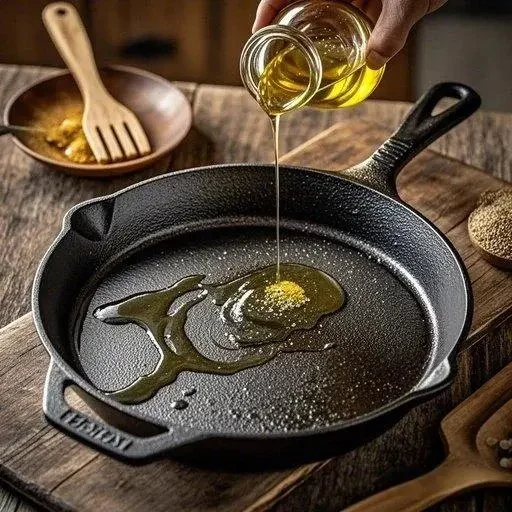
- Apply a Thin Layer of Oil: Choose a high-smoke point oil, such as flaxseed oil, vegetable oil, or canola oil. Apply a thin, even layer of oil all over the skillet, including the handle and exterior.
- Bake It: Place the skillet upside down in the oven on the middle rack, with a baking sheet or aluminum foil on the lower rack to catch any drips. Bake at 450-500°F for one hour. Allow the skillet to cool inside the oven.
- Repeat the Process: For the best results, repeat the seasoning process 2-3 times. Each layer of seasoning strengthens the skillet’s non-stick surface and protection against rust.
Once this process is complete, your cast iron skillet will have a beautiful, durable, and non-stick surface that will improve with use over time.
4- Common Mistakes When Seasoning Cast Iron
While seasoning is an essential part of maintaining a cast iron skillet, it’s easy to make a few mistakes. Avoid these common errors for the best results:
- Using Too Much Oil: Applying too much oil can result in a sticky or uneven surface. Always apply a thin layer to avoid this issue.
- Not Allowing Proper Cooling Time: Let your skillet cool inside the oven to ensure the seasoning has fully adhered to the surface.
- Overlooking the Handle: Don't forget to season the handle as well. This ensures the entire skillet is properly protected.
- Skipping the Repeating Process: For maximum protection and non-stick quality, it's crucial to season your skillet several times.
5- Real-Life Examples: Proper Seasoning Success Stories
Many cast iron enthusiasts share their success stories with seasoning. One user, Mark, shared how his first attempt at seasoning his skillet was less than ideal. He applied too much oil, resulting in a sticky surface. However, after following the proper steps and seasoning it a few more times, he now enjoys perfect results. Mark credits his skillet’s amazing cooking performance to his commitment to seasoning it correctly.
Another camper, Julie, emphasized how seasoning her cast iron skillet before a camping trip transformed her cooking experience. She was able to cook everything from seared steaks to scrambled eggs without sticking, thanks to her well-seasoned skillet.
These stories highlight the importance of proper seasoning and how it can truly enhance your cooking experience, whether at home or in the great outdoors.





 Northwest Remodeling and Services4.0 (80 reviews)
 Expert Handyman & Remodeling4.0 (120 reviews)
 Solid Contact Construction5.0 (14 reviews)
 Tattered Accents5.0 (23 reviews)
 Floor Inspirations4.0 (78 reviews)
 McAllister Home Builders5.0 (71 reviews)
 How to Refurbish a Cast Iron Skillet at Home: A Complete Guide
 Best Products for Cast Iron Restoration Service: Top Tools and Products
 Simple At-Home Techniques for Cast Iron Restoration | Restore Your Cookware
 How to Restore Cast Iron at Home | A Complete Guide for Beginners
 How Long Does Cast Iron Skillet Refinishing Take? Realistic Timeline for Restoration
 What to Avoid When Attempting Cast Iron Refinishing: Common Mistakes to Watch Out For