
- Understanding-Color-Temperature-for-Bathroom-Lighting
- Choosing-the-Right-Light-Tone-for-Different-Bathroom-Uses
- Using-Layered-Lighting-to-Balance-Comfort-and-Visibility
- Common-Mistakes-Homeowners-Make-with-Light-Temperature
- Practical-Planning-Tips-for-Long-Term-Results
Understanding Color Temperature for Bathroom Lighting
Learning How to Determine the Best Color Temperature for Bathroom Lighting can make a dramatic difference in both comfort and functionality. Many homeowners focus on fixture styles or brightness levels but overlook color temperature — the factor that determines whether light appears warm and relaxing or crisp and energizing.
Color temperature is measured in Kelvin (K). Lower Kelvin numbers produce warmer light with a yellow tone, while higher numbers produce cooler, bluish-white light. Bathrooms require a careful balance because they serve multiple purposes, from relaxing showers to detailed grooming tasks.
1. How Kelvin Ratings Affect Everyday Use
Different Kelvin ranges create very different experiences inside a bathroom environment.
1.1 Warm Light Around 2700K–3000K
Warm lighting creates a comfortable and spa-like atmosphere. This range works well for evening routines and helps bathrooms feel less clinical. Many homeowners prefer this temperature for overhead lighting because it creates a welcoming space.
1.2 Neutral Light Around 3500K–4100K
Neutral lighting provides a clean appearance without feeling too harsh. This range is often considered the safest choice for general bathroom lighting because it balances comfort with visibility.
1.3 Cool Light Around 5000K and Above
Cool white lighting mimics daylight and is useful for precision tasks such as shaving or applying makeup. However, if used alone, it can make a bathroom feel overly bright and sterile.
2. Why Bathrooms Require Special Lighting Consideration
Unlike living rooms or bedrooms, bathrooms combine reflective surfaces such as mirrors, tile, and porcelain. These surfaces amplify brightness and can make color temperature feel more intense than expected.
Homeowners often discover that a bulb that looked perfect in the store feels too harsh once installed above a mirror. Testing lighting in the actual space is often the best approach.
Choosing the Right Light Tone for Different Bathroom Uses
Bathrooms are multifunctional spaces, so selecting a single color temperature rarely produces the best results. The most effective approach is matching light tone to specific uses within the room.
3. Mirror Lighting and Grooming Tasks
Vanity areas require accurate and balanced lighting.
3.1 Why Neutral White Works Best
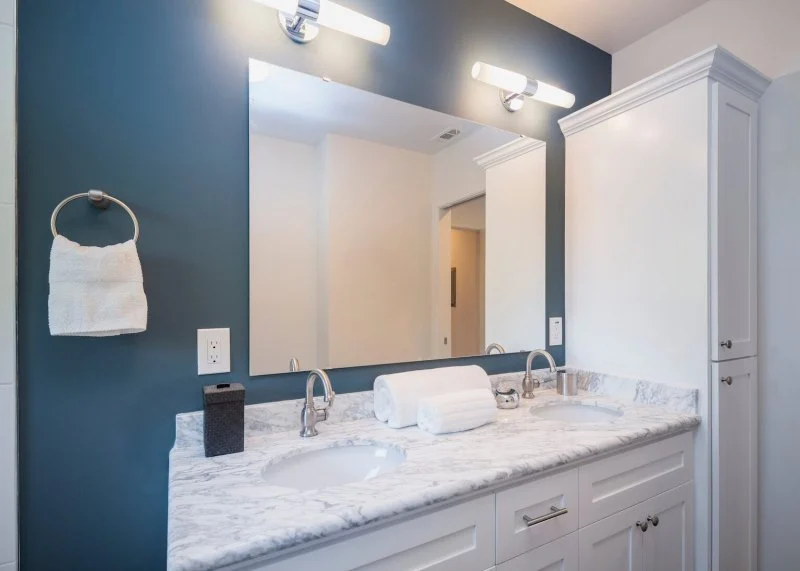
Most designers recommend 3500K–4100K lighting near mirrors because it represents skin tones naturally without the yellow tint of warm light or the harsh blue cast of cooler lighting.
3.2 Even Illumination Matters More Than Brightness
Positioning lights on both sides of a mirror often produces better results than relying solely on overhead fixtures. This reduces shadows and improves clarity.
4. Shower and Ambient Lighting
Comfort matters most in bathing areas.
4.1 Creating a Relaxing Atmosphere
Warmer lighting around 3000K can make evening showers more relaxing and reduce visual fatigue.
4.2 Maintaining Enough Visibility
Even when choosing warm lighting, brightness should still be sufficient to ensure safety on wet surfaces.
5. Morning Routine Considerations
Morning lighting needs differ from evening lighting.
5.1 Supporting Energy and Alertness
Slightly cooler lighting can help people wake up more easily, especially during darker fall and winter mornings.
5.2 Adjustable Lighting Options
Dimmable fixtures or adjustable LED bulbs allow homeowners to switch between bright daytime lighting and softer evening light.
Using Layered Lighting to Balance Comfort and Visibility
The most successful bathroom designs combine multiple light sources with different purposes. This layered approach ensures that no single fixture has to do everything.
6. Ambient Lighting as the Foundation
Ceiling fixtures provide the main illumination.
6.1 Selecting a Balanced Temperature
Neutral lighting around 3500K often works best for overall illumination because it suits both daytime and nighttime use.
6.2 Avoiding Overly Cool Overhead Lighting
Very cool ceiling lighting can make tile and porcelain appear stark and uncomfortable.
7. Task Lighting for Precision
Task lighting improves visibility in critical areas.
7.1 Vanity Fixtures
Side-mounted lights around the mirror improve accuracy for grooming tasks.
7.2 Focused Lighting Zones
Separate task lighting allows the rest of the room to remain softer and more relaxing.
8. Accent Lighting for Comfort
Accent lighting enhances atmosphere.
8.1 Night Lighting Options
Low-level lighting makes nighttime visits safer without disturbing sleep.
8.2 Decorative Fixtures
Decorative fixtures add personality while maintaining functional lighting.
Many homeowners researching lighting upgrades also explore fixture restoration and vintage materials through Cast Iron Restoration, where period-appropriate fixtures and finishes can complement modern lighting improvements.
Common Mistakes Homeowners Make with Light Temperature
Even well-planned remodels can fall short if color temperature choices are rushed.
9. Using One Temperature Everywhere
Bathrooms rarely benefit from a single lighting temperature.
9.1 Lack of Flexibility
Using only warm or only cool lighting can make certain tasks uncomfortable.
9.2 Reduced Visual Balance
A mix of lighting temperatures often creates a more natural environment.
10. Choosing Bulbs Without Testing
Lighting behaves differently depending on wall color and materials.
10.1 Store Lighting vs Home Lighting
Bulbs often appear different in showroom lighting than they do in real bathrooms.
10.2 Small Sample Testing
Trying one or two bulbs before replacing everything can prevent expensive mistakes.
Practical Planning Tips for Long-Term Results
Choosing bathroom lighting is easier when planning for long-term use rather than immediate appearance.
11. Selecting High-Quality LED Lighting
LED lighting offers consistent color and efficiency.
11.1 Stable Color Output
Higher-quality LEDs maintain their color temperature over time.
11.2 Energy Efficiency
Efficient lighting reduces long-term operating costs.
12. Planning for Future Adjustments
Flexible systems adapt better to changing needs.
12.1 Dimmers and Smart Controls
Dimmers allow precise adjustments throughout the day.
12.2 Replaceable Bulb Systems
Fixtures that use replaceable bulbs make it easier to adjust temperature later.
By carefully evaluating color temperature and layering lighting sources, homeowners can create bathrooms that feel comfortable, functional, and visually balanced for years to come.




 MixStyle Kitchen & Bathroom Remodeling5.0 (32 reviews)
 MKVJ Construction5.0 (27 reviews)
 Closer Look General Contracting5.0 (36 reviews)
 Miracle Method Surface Refinishing4.0 (88 reviews)
 Garzone Construction5.0 (28 reviews)
 NSG Construction LLC5.0 (14 reviews)
 How to Refurbish a Cast Iron Skillet at Home: A Complete Guide
 Best Products for Cast Iron Restoration Service: Top Tools and Products
 Simple At-Home Techniques for Cast Iron Restoration | Restore Your Cookware
 How to Restore Cast Iron at Home | A Complete Guide for Beginners
 How Long Does Cast Iron Skillet Refinishing Take? Realistic Timeline for Restoration
 What to Avoid When Attempting Cast Iron Refinishing: Common Mistakes to Watch Out For