
Power-Tool Cast Iron Restoration: Inspect Before Grinding
A wire wheel or grinder can remove rust quickly, but it can also erase maker marks, thin the cooking surface, round edges, open hidden cracks, spread unknown coating dust, and leave an unsafe finish. Before reaching for a power tool, identify the pan, contamination history, restoration goal, and the least destructive method that can achieve it.
Quick answer
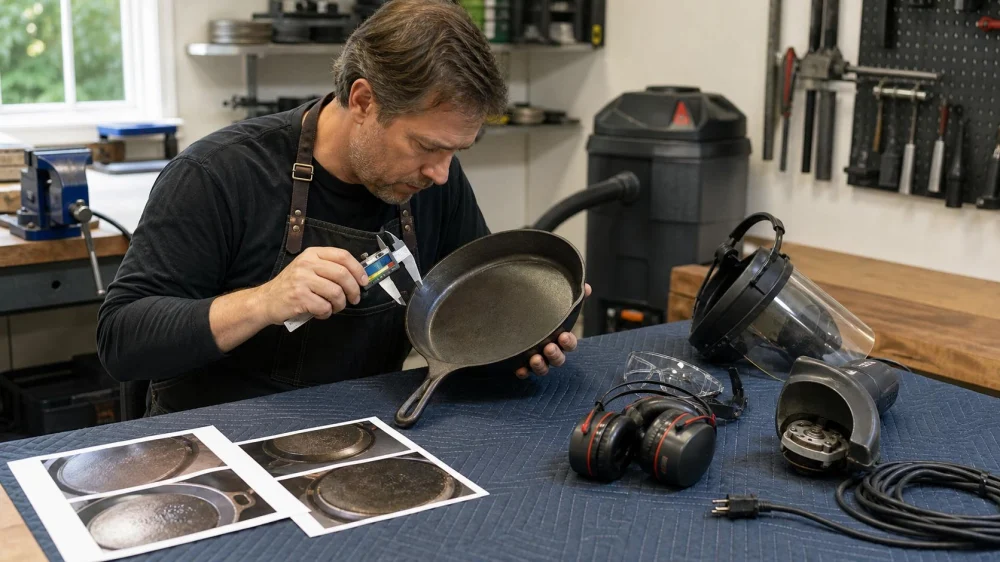
Do not power-grind cast iron as a routine first step. Photograph maker marks, measure flatness, inspect for cracks and thin areas, and determine whether the surface is bare iron, enamel, paint, plating, filler, or an unknown coating. Unknown dust can be hazardous and tool failures can throw fragments. Prefer controlled hand cleaning or professional restoration when identification, value, ventilation, containment, PPE, or food-contact suitability is uncertain.

Carefree Koatings / miracle method louisville ky
8919 Renetta Ct, Cincinnati, OH 45251, USA
Reasons to pause before grinding
Abrasive removal changes the casting permanently. Even a soft-looking wire brush can alter high points, polish raised letters, smear softer metal repairs, or leave embedded wire fragments. A grinder can create low spots, make a pan wobble, sharpen an edge, or reduce wall thickness.
Collectors may value original tooling marks, gate marks, logos, heat rings, casting texture, and factory finish. Aggressive smoothing can reduce historical and monetary value without improving cooking.
Power removal also hides evidence. Paint colour, rust pattern, residue layers, cracks, and repairs can help identify prior use and damage. Document them before cleaning.
Miracle Method Surface Refinishing / miracle method boulder
Santa RosaSonoma CountyCalifornia
3200 Dutton Ave Suite #325, Santa Rosa, CA 95407, USA
Identify the object and coating
Determine whether the piece is cookware, stove hardware, decorative iron, industrial equipment, a humidifier part, a weight, or something else. Similar castings may not be intended for food.
Look for enamel, porcelain, nickel or chrome plating, paint, lacquer, wax, seasoning, brazing, solder, epoxy, filler, and unknown repairs. Do not grind a coating simply because it is dark or peeling. Vintage paint, metal repairs, and residues can contain lead or other hazardous substances.
The CDC’s NIOSH lead-exposure guidance notes that cutting or grinding metal and sanding lead paint can create lead dust that may not be visible or have an odour.
Document condition and value
Before any irreversible step:
- photograph all sides, marks, texture, rust, and repairs in even light;
- measure diameter, wall thickness at representative points, and weight when useful;
- check whether the base rocks on a known flat surface;
- inspect handles, ears, rims, legs, bail attachments, and lids for cracks;
- note sharp pitting, heat damage, drill holes, and welded or brazed areas;
- research maker, age, rarity, and replacement value;
- write the goal: stable display, cooking use, rust reduction, or full conservation.
A rare or structurally questionable piece should be assessed by a cast iron conservator or experienced restoration specialist before metal removal.
Plan for dust, projectiles, and noise
Rotating wire strands, abrasive wheel fragments, rust scale, coating particles, and cast-iron dust can strike the operator and travel across a workspace. Power tools can catch edges, kick, pull loose clothing, or move an unsecured pan. Noise can damage hearing.
OSHA’s portable powered-tool standard addresses guards and eye and face protection for workplace grinders. A home project is not exempt from the physical hazards that those controls address.
Do not grind in a kitchen, living area, garage shared with food storage, or near children and pets. Unknown coatings require hazard assessment, containment, local exhaust, cleanup methods, and suitable respiratory protection—not a paper dust mask chosen by guesswork. Outdoor work can still contaminate soil, neighbours, clothing, and vehicles.
Compare less destructive methods
For known bare cookware, ordinary washing, a nylon brush, plastic scraper, controlled hand abrasion, or a maker-approved rust treatment may be enough. Long soaking, acid exposure, electrolysis, lye, heat, and chemical stripping each have hazards and material limits; they are not automatically safe alternatives.
Choose the method after identifying the soil:
- food residue needs cleaning, not metal removal;
- loose seasoning needs controlled cleaning and reseasoning;
- surface rust may respond to gentle mechanical or approved chemical treatment;
- deep scale, paint, plating, unknown coating, or repairs may need professional conservation;
- cracks, severe pitting, or thin metal may make retirement safer than restoration.
Test the least visible small area only after the full plan is approved.
Verify the surface after removal
If qualified work removes material, the piece still needs inspection. Check for exposed cracks, pinholes, sharp edges, embedded wire, smeared repairs, remaining coating, uneven thickness, warping, and residues. Clean the workspace and object using methods suited to the identified hazards.
A shiny surface is not proof of food safety. The prior use, coating, repairs, base metal, and contamination history still matter. Laboratory testing may be appropriate in limited cases, but one surface swab does not certify an entire pan or all possible contaminants.
Only known, structurally sound bare cookware should move to a food-safe cleaning and seasoning process. Decorative or uncertain pieces should remain out of food service.
Food-contact and professional limits
This article does not teach power-tool operation, respirator selection, lead abatement, or hazardous coating removal. Those tasks require tool-specific training, guards, work holding, PPE, exposure assessment, ventilation, containment, and disposal procedures.
Do not attempt grinding if the piece is valuable, coated, repaired, thin, cracked, unknown-use, or intended to return to food contact without expert evaluation. Professional conservation may intentionally retain patina and stable marks rather than making iron look new.
Frequently asked questions
Will a wire wheel ruin cast iron?
It can alter texture, marks, edges, coatings, and dimensions, and it can throw wires or dust. Whether it is appropriate requires a documented plan.
Can I grind a vintage pan smooth for better seasoning?
Smoothness is not required for usable seasoning. Grinding can remove history and create uneven thickness or warping.
Is outdoor grinding safe?
It may reduce indoor contamination but does not solve dust, noise, projectile, lead, soil, neighbour, or cleanup hazards.
Can I cook in the pan after grinding?
Only after identity, prior use, coatings, repairs, structural condition, contamination, cleaning, and food-contact suitability are resolved. Appearance alone is not enough.
Next steps
Put down the power tool and document the object first. Identify its purpose, maker, surface, repairs, contamination history, condition, and value. Match the least destructive method to the actual soil. If dust hazards, coatings, collectability, or food-contact safety are uncertain, use a qualified cast iron restoration or conservation professional.


 Marcel's Custom Kitchens & Baths4.0 (56 reviews)
 Waldron Construction Kitchen & Bath4.0 (68 reviews)
 Kitchens by Gregory5.0 (7 reviews)
 Mordini General Contracting5.0 (8 reviews)
 T G M Remodeling4.0 (10 reviews)
 VD PROFESSIONAL CARPENTRY5.0 (2 reviews)
 How to Refurbish a Cast Iron Skillet at Home: A Complete Guide
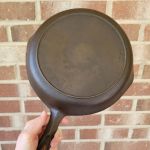 Best Products for Cast Iron Restoration Service: Top Tools and Products
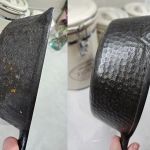 Simple At-Home Techniques for Cast Iron Restoration | Restore Your Cookware
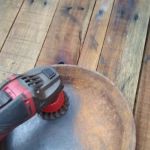 How to Restore Cast Iron at Home | A Complete Guide for Beginners
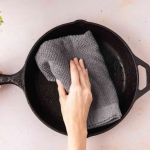 How Long Does Cast Iron Skillet Refinishing Take? Realistic Timeline for Restoration
 What to Avoid When Attempting Cast Iron Refinishing: Common Mistakes to Watch Out For