
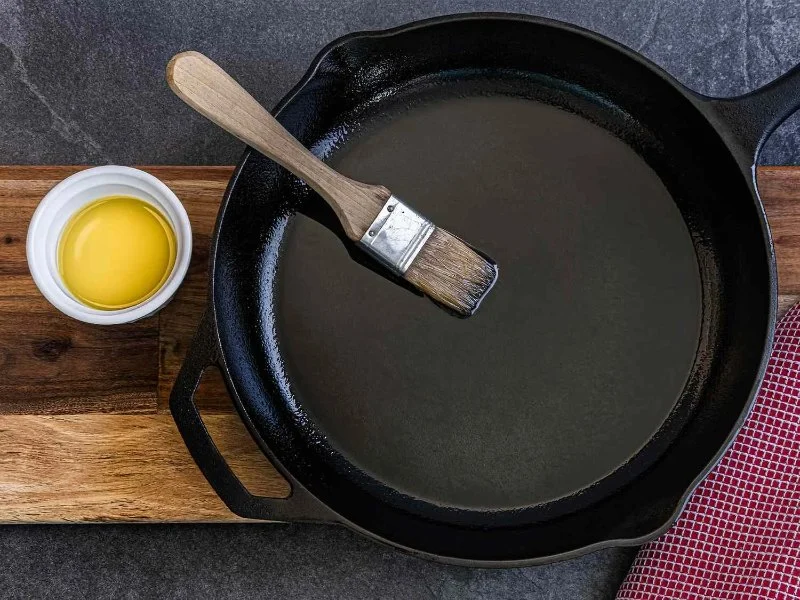
How to Identify Vintage Seasoning on a Cast Iron Skillet
- Understanding Vintage Seasoning
- How to Recognize Authentic Vintage Finishes
- Testing and Inspecting Surface Condition
- Restoring and Preserving Vintage Seasoning
- Real Examples of Vintage Cast Iron
- Explore More with Cast Iron Restoration
1. Understanding Vintage Seasoning
Before learning how to identify vintage seasoning on a cast iron skillet, it’s important to understand what “seasoning” actually is. Seasoning refers to the thin layer of polymerized oil that coats the surface of a cast iron pan. Over time, as the skillet is used, this layer builds up, creating a non-stick, protective surface that resists rust and adds depth to the skillet’s patina.
Vintage seasoning has unique characteristics that distinguish it from modern finishes. Older skillets, particularly those made before the 1960s, were often hand-machined and polished, resulting in a smoother surface that seasoned differently than today’s rougher, factory-textured pans. This gives vintage cookware a silky, almost glass-like finish that many collectors prize for both its aesthetic and performance qualities.

Miracle Method Surface Refinishing / miracle method boulder
Santa RosaSonoma CountyCalifornia
3200 Dutton Ave Suite #325, Santa Rosa, CA 95407, USA
2. How to Recognize Authentic Vintage Finishes
Identifying vintage seasoning requires a keen eye for subtle details. First, examine the color and sheen of the skillet. Authentic vintage seasoning tends to have a deep, uniform black or dark bronze color with a soft, satin-like gloss rather than the matte appearance of newer pans. It should look like it’s part of the metal, not simply sitting on top of it.
Next, feel the texture. A well-maintained vintage skillet will be incredibly smooth to the touch — often more so than modern cast iron. This smoothness comes from decades of cooking and natural polymerization, not just oil build-up. If the surface feels sticky, gritty, or uneven, it may indicate a recent re-seasoning or a pan that has lost its original coating.
Pay attention to small details such as maker’s marks and casting style. Brands like Griswold, Wagner Ware, and Birmingham Stove & Range often produced skillets that develop distinct finishes over time. The craftsmanship of these early pieces often contributes to how beautifully their seasoning ages.
3. Testing and Inspecting Surface Condition
One simple way to identify vintage seasoning is through the “oil test.” Apply a thin layer of cooking oil to the skillet and gently heat it on low. If the surface darkens evenly without sticky patches or smoke, you’re likely dealing with a well-established seasoning layer. A pan with newer or uneven seasoning may develop streaks or a tacky surface during this test.
Another method is the paper towel test — rub a clean white towel across the skillet’s surface. True vintage seasoning will leave little to no residue, while newer coatings may leave dark streaks or signs of excess oil. Additionally, check the skillet’s edges and handle junctions. In genuine vintage pans, these areas often show gradual wear rather than flaking, indicating decades of use and seasoning build-up.
4. Restoring and Preserving Vintage Seasoning
If you’ve found an old skillet that seems to have vintage seasoning, handle it with care. Over-cleaning or aggressive scrubbing can strip away the very surface that makes the pan valuable. Avoid soaking it in harsh chemicals or using abrasive tools. Instead, gently wash with warm water and a soft brush.
To maintain the vintage patina, lightly coat the surface with neutral oil (such as flaxseed or grapeseed oil) after each use. Avoid over-oiling, which can cause sticky buildup. When restoring a neglected pan, aim to preserve as much of the original seasoning as possible — it’s part of the skillet’s history and character.
Experts at Cast Iron Restoration recommend low-temperature oven curing when reviving old skillets. This gradual process helps reinforce the existing seasoning without burning or damaging it, allowing the skillet to retain its vintage charm.
5. Real Examples of Vintage Cast Iron
One collector from Tennessee shared a story about discovering a 1930s Wagner Ware skillet at an estate sale. The pan had a rich, bronze-black tone and a mirror-smooth cooking surface — hallmarks of vintage seasoning. After gentle cleaning and light oiling, the skillet performed flawlessly, showcasing how well-preserved seasoning can stand the test of time.
Similarly, many enthusiasts who inherit family cookware find that older cast iron pieces outperform modern ones precisely because of their aged seasoning layers. These pans hold heat more evenly, resist sticking naturally, and develop a flavor memory that enhances cooking over time.
6. Explore More with Cast Iron Restoration
Whether you’re a collector, a home chef, or just curious about the charm of vintage cookware, understanding how to identify vintage seasoning helps you appreciate the artistry behind each piece. For professional advice, restoration tips, and premium care products, explore Cast Iron Restoration — your trusted source for bringing heritage cookware back to life.
From gentle cleaning kits to expert restoration services, Cast Iron Restoration helps you protect your investment and keep your cast iron in top shape for generations to come.





 VIP Remodeling Services LTD5.0 (6 reviews)
 All Surface Experts, Co.4.0 (18 reviews)
 Bath Fitter4.0 (167 reviews)
 More For Less Remodeling4.0 (217 reviews)
 Master Mynd Remodeling4.0 (18 reviews)
 Custom Tub Reglazing4.0 (48 reviews)
 How to Refurbish a Cast Iron Skillet at Home: A Complete Guide
 Best Products for Cast Iron Restoration Service: Top Tools and Products
 Simple At-Home Techniques for Cast Iron Restoration | Restore Your Cookware
 How to Restore Cast Iron at Home | A Complete Guide for Beginners
 How Long Does Cast Iron Skillet Refinishing Take? Realistic Timeline for Restoration
 What to Avoid When Attempting Cast Iron Refinishing: Common Mistakes to Watch Out For