
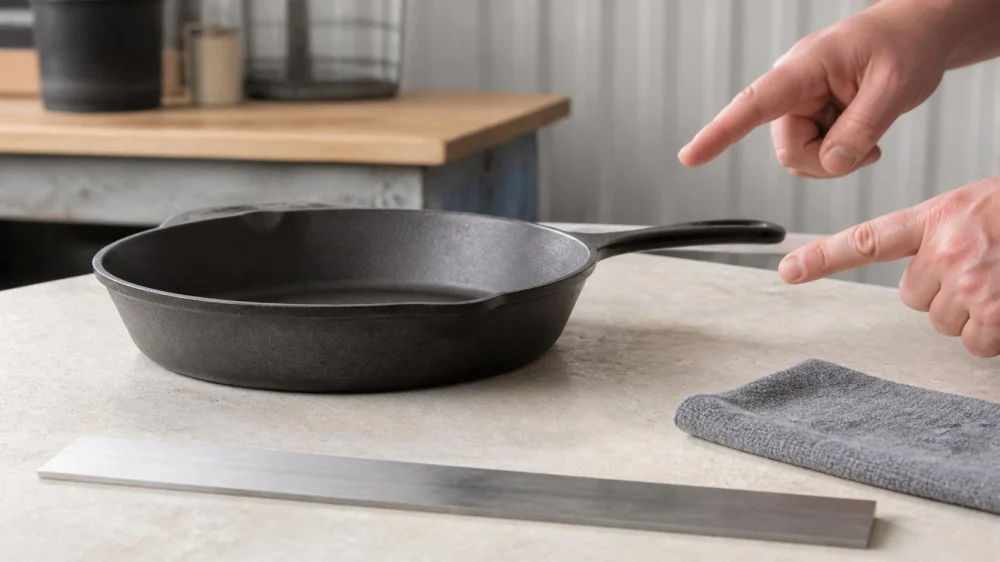
Warped Cast Iron: Check Stability Before Cooking
On this page
Quick answer
Let the pan cool completely, clean loose debris, and place it on a known flat, stable surface. Check for rocking, spinning, cracks, handle movement, and an uneven cooking surface without striking or force-heating the iron. A small shape change may affect some cooktops more than others, but instability, cracks, or uncertain history deserves conservative use or expert advice.

Surface Specialists of South Central MN / surface specialists mn
MankatoBlue Earth CountyMinnesota
436 Lyd Blvd, Mankato, MN 56001, USA
How cast iron changes shape and why it matters
Cast iron is rigid but can crack or distort after severe thermal stress, impact, manufacturing variation, or long use. A convex or concave base changes contact with a flat cooktop and can allow oil to pool away from or toward the centre. Ringed, raised, or heat-ring bases are designed differently, so the original form matters before calling a pan warped.
This guide is for United States owners inspecting a bare cast iron skillet, griddle, or similar cookware item while it is cool. It is not a metalworking, welding, hammering, machining, or high-heat reshaping guide. Antique value, unknown coatings, cracks, cooktop requirements, and manufacturer instructions may require specialist advice.

Miracle Method Surface Refinishing / miracle tub refinishing
Santa RosaSonoma CountyCalifornia
3200 Dutton Ave Suite #325, Santa Rosa, CA 95407, USA
Practical checklist
- The exact cookware type, maker or pattern if known, diameter, intended burner, and whether the base includes a designed heat ring or raised detail.
- A fully cool, clean, dry pan and a verified flat, sturdy test surface that will not be scratched by careful placement.
- Rocking direction, spin, visible daylight under the base, oil-pooling history, uneven browning, and changes after a known event.
- Hairline cracks around the sidewall, handle, helper handle, rim, gate marks, or repaired areas, checked in bright light without flexing.
- Handle security, sharp burrs, severe pitting, unknown residues, coating damage, and any movement that could spill hot contents.
- Cooktop type and instructions, because smooth glass, induction, coil, gas, oven, grill, and open-fire use impose different contact concerns.
- Photographs of the base, side profile, cooking surface, marks, test setup, and any suspected crack for a restorer or manufacturer.
Step-by-step plan
- Cool, clean, and dry the pan. Do not test immediately after cooking or move it between hot and cold surfaces.
- Confirm the test counter or plate is flat and stable, then lower the pan gently without sliding it across a scratch-prone surface.
- Press lightly near opposite edges using one hand while keeping fingers away from pinch points. Note repeatable rocking without forcing the pan.
- Nudge the handle gently to see whether the base spins unusually. Do not spin heavy cookware fast or let it strike nearby objects.
- Inspect the side profile and cooking surface with soft reflected light. Do not rely on one ruler reading when designed rings or surface texture intervene.
- Check every suspected line for a crack and stop using the pan for cooking if a structural defect, loose handle, or unstable support is possible.
- Compare findings with cooktop and manufacturer guidance or send clear photos to an experienced cast iron restorer before deciding on limited use or display.
Record the pan identity, dimensions, base design, surface used for testing, direction and amount of wobble in plain terms, whether it spins, visible cracks, handle condition, cooking symptoms, and any known drop or thermal-shock event. Repeat photos from the same low side angle if monitoring.
Limits and important notes
Do not hammer, press, grind, weld, machine, or heat a pan aggressively to change its shape. These actions can crack iron, remove historic material, create an unstable base, or produce unknown food-contact surfaces. A pan that sits imperfectly on one surface may behave differently elsewhere, but that does not override cooktop safety instructions.
Stop cooking with the item if it has a suspected crack, moving handle, sharp break, severe instability, or a history involving unknown chemicals or coatings. Contact the manufacturer for modern cookware and an experienced restorer for collectible pieces. If hot cookware rocks or spills, turn off heat if safe and keep people away until everything cools.
Frequently asked questions
What is a cast iron spinner?
Collectors often use the term for a pan whose base allows it to rotate on a flat surface, commonly because the centre sits lower.
Does any wobble make the pan unusable?
Not always, but stability, cracks, cooktop design, hot-liquid risk, and manufacturer instructions determine whether use is sensible.
Can seasoning make a pan look warped?
Heavy residue or uneven buildup can confuse visual checks, but remove only material you have safely identified before reassessing.
Can I flatten cast iron with heat and weight?
Do not attempt aggressive reshaping. Cast iron can crack, and uncontrolled heating creates burn, fire, and damage risks.
Will a warped pan work on induction?
Induction also depends on magnetic coupling, contact, pan stability, and appliance guidance. Check the cooktop manual and the pan's condition.
Sources and evidence
Use the cookware and cooktop manufacturer instructions, original pattern references when available, clear inspection photographs, and advice from an experienced cast iron restorer. Informal flatness tests describe behaviour on one surface; they do not certify structural integrity, food-contact safety, or appliance compatibility.
Conclusion and next steps
Inspect the pan only when cool, identify its intended base design, and document repeatable wobble, spin, surface shape, cracks, and handle condition. Match those findings to the cooktop and intended use. Preserve questionable or collectible pieces rather than attempting forceful reshaping, and seek specialist guidance when stability or structure is uncertain.


 American National Contracting INC4.0 (17 reviews)
 United Remodeling Services5.0 (181 reviews)
 White Oak Renovations5.0 (4 reviews)
 Home Remodeling llc5.0 (12 reviews)
 Chandler Construction Services LLC5.0 (11 reviews)
 GSD Bathroom and Kitchen Remodeling San Jose5.0 (53 reviews)
 How to Refurbish a Cast Iron Skillet at Home: A Complete Guide
 Best Products for Cast Iron Restoration Service: Top Tools and Products
 Simple At-Home Techniques for Cast Iron Restoration | Restore Your Cookware
 How to Restore Cast Iron at Home | A Complete Guide for Beginners
 How Long Does Cast Iron Skillet Refinishing Take? Realistic Timeline for Restoration
 What to Avoid When Attempting Cast Iron Refinishing: Common Mistakes to Watch Out For