
Used Cast Iron Skillet: Inspect Before You Restore
On this page
- Start with the source and history
- Identify bare or enameled cast iron
- Check for cracks and repairs
- Test for wobble and warping
- Inspect rust, pitting, and surface loss
- Look at the handle, rim, and pour spouts
- Document marks before cleaning
- Avoid unsafe mystery residue
- Choose a proportionate restoration
- Test after restoration
- Used skillet checklist
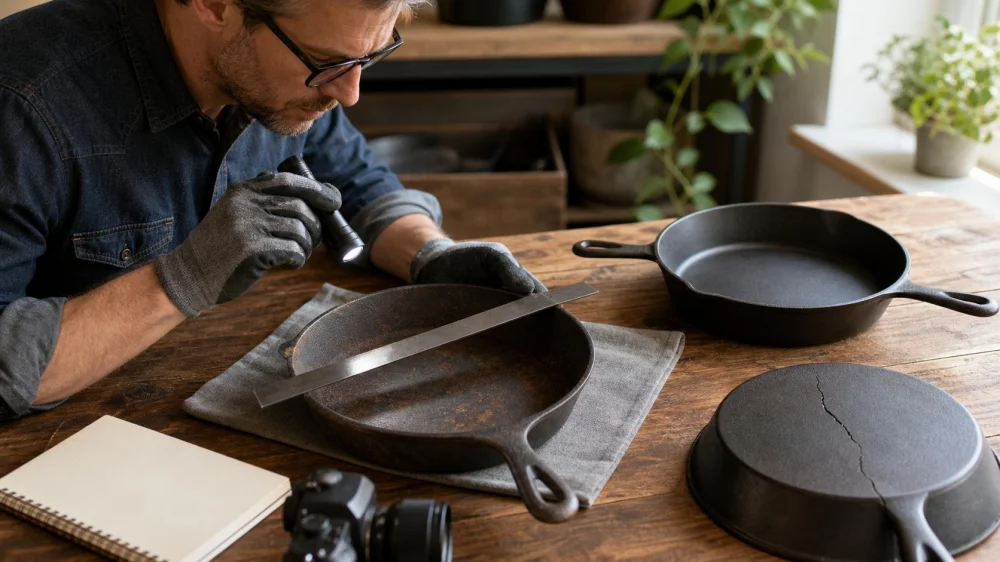
A used cast iron skillet can be an affordable cooking tool or an interesting restoration project, but dark seasoning and surface rust can hide important details. Before stripping or scrubbing, inspect the pan for cracks, old repairs, warping, severe pitting, enamel damage, and unknown contamination. Some defects are cosmetic; others make the pan unsuitable for cooking.
Keep the first inspection dry and well lit. Photograph the pan as found, identify its surface, and choose the least aggressive cleaning method that fits its condition. Restoration should preserve sound metal and useful marks rather than erase every sign of age.

Miracle Method Surface Refinishing / miracle bathtub refinishing
Santa RosaSonoma CountyCalifornia
3200 Dutton Ave Suite #325, Santa Rosa, CA 95407, USA
Start with the source and history
Ask the seller or giver how the pan was used and stored. Find out whether it cooked food, held motor oil, melted non-food materials, served as decoration, survived a fire, or spent years in a garage or barn. A clear food-use history lowers uncertainty but does not replace inspection.
At a market or online listing, request photos of the cooking surface, underside, sidewalls, handle, helper handle, rim, and maker marks. Ask about cracks, movement on a flat surface, and repairs. Treat claims such as “perfectly flat” or “only surface rust” as information to verify.

Carefree Koatings / miracle method louisville ky
8919 Renetta Ct, Cincinnati, OH 45251, USA
Identify bare or enameled cast iron
Bare cast iron develops a dark oil-based seasoning and can rust where iron is exposed. Enameled cast iron has a glass-like coating that may be colored, cream, black, matte, or glossy. Dark enamel can be mistaken for seasoning, especially inside older pieces.
Do not use lye, oven cleaner, electrolysis, grinding, or aggressive metal tools until the surface is identified. Methods used on bare iron can permanently damage enamel. If uncertain, consult the manufacturer, an experienced restorer, or a qualified cookware specialist.
Check for cracks and repairs
Clean loose dust gently, then use bright angled light to inspect the rim, sidewalls, handle junction, pour spouts, and cooking surface. Look for a line that crosses the metal, opens under light pressure, changes the ring when tapped gently with a non-damaging object, or shows rust emerging from a narrow seam.
Never strike the pan hard or heat it to “test” a suspected crack. Old welds, brazing, staples, plugs, or filled areas may indicate a previous failure. A cracked or structurally repaired skillet should not be used for cooking unless an appropriately qualified expert confirms it is safe for that purpose; many are best kept for display.
Test for wobble and warping
Place the clean, cool skillet on a known flat surface and press gently at opposite edges. Rotate it and check whether it rocks, spins easily, or has a visibly bowed base. Protect glass or polished surfaces with a suitable flat barrier that does not hide movement.
A slight wobble may be manageable on a gas grate but frustrating on a smooth electric or induction surface. Warping can also cause oil to pool at the edge or center. Do not hammer, press, or heat-shock a pan to flatten it; cast iron can crack suddenly.
Inspect rust, pitting, and surface loss
Light orange surface rust can often be removed from sound bare iron, while deep pits indicate metal loss. Examine the cooking surface and underside after gentle cleaning. Pay attention to pits that create sharp edges, trap residue, weaken a thin area, or make cleaning unreliable.
Do not grind away large amounts of metal to chase a perfectly smooth appearance. Heavy power-tool work can remove maker marks, alter the cooking surface, create dangerous dust, or thin the pan unevenly. Severe corrosion deserves expert evaluation or retirement from food use.
Look at the handle, rim, and pour spouts
Check that the handle is continuous with the body and has no crack at its narrowest point. Inspect helper handles, hanging holes, rims, lids, and pour spouts for chips or sharp projections. A missing cosmetic edge is different from damage that affects grip, fit, or strength.
Lift the empty cool pan with two hands over a padded surface to assess comfort and balance. Do not test a questionable handle over feet, a hard floor, or a hot burner. If the pan is too heavy to control safely, choose a smaller piece rather than relying on a slip-on cover alone.
Document marks before cleaning
Photograph logos, letters, numbers, gate marks, heat rings, size markings, and casting features before restoration. Use low-angle light and images from several directions. Record dimensions and weight without scraping a mark to make it visible.
Research identification through reputable collector references, manufacturer histories, or knowledgeable groups, but separate evidence from speculation. A rare-looking mark does not guarantee value, and aggressive cleaning can reduce collector interest even when the pan remains usable.
Avoid unsafe mystery residue
Unknown paint, plating, oily chemicals, melted material, pesticide, lead-containing residue, or industrial use can make home restoration inappropriate. Do not sand, burn, or heat an unidentified coating, since fumes and dust may be hazardous.
A consumer swab may not answer every contamination question and can be affected by surface conditions. When the history suggests non-food use or the residue cannot be identified, consult a qualified testing or hazardous-material professional. Retiring the skillet from cooking is reasonable when safety cannot be established.
Choose a proportionate restoration
For sound bare iron with food-use history, start with ordinary washing, controlled rust removal, thorough drying, and thin seasoning layers. Escalate only when old failed seasoning or rust truly requires it. Follow safe product instructions, ventilation, skin and eye protection, and chemical disposal rules.
Never mix cleaners. Avoid thermal shock, self-cleaning oven cycles, open-fire burning, and uncontrolled high heat. Electrolysis and strong alkali processes require specific equipment, chemical knowledge, electrical safety, and separation from enameled pieces; use an experienced restorer when uncertain.
Test after restoration
After the skillet is clean, inspect it again under bright light. Confirm that no crack was hidden by buildup and that rust removal did not reveal severe pitting. Wash away restoration residue, dry promptly, and apply a very thin appropriate seasoning to bare iron.
Heat the pan gradually during early use and watch for movement, odor, flaking, or a returning line. Discard food and stop using the pan if a structural or contamination concern appears. A restored appearance is not proof that a questionable pan is safe.
Used skillet checklist
- Ask about food use, storage, fire, and non-food exposure.
- Identify bare iron versus enamel before choosing a method.
- Inspect the rim, walls, handle, and surface for cracks.
- Check wobble on a cool, known flat surface.
- Distinguish light rust from deep structural pitting.
- Evaluate handles, edges, lid fit, and safe lifting.
- Photograph all maker and casting marks before cleaning.
- Do not heat or sand an unknown coating or residue.
- Use the least aggressive suitable restoration method.
- Inspect again before gradual food use.
The best used cast iron purchase is not always the cleanest-looking pan. A sound, slightly rusty skillet with a known food history can be a better project than a glossy piece hiding a crack or mystery coating. Inspect first, document what matters, restore only as much as necessary, and retire any pan whose structural or contamination risk remains unresolved.



 1st Avenue Construction & Electric Inc.5.0 (2 reviews)
 Quality Refinishing and chip repair4.0 (10 reviews)
 Complete Closet Design - Shorewood Custom Closets5.0 (121 reviews)
 Orland Builders Inc.4.0 (36 reviews)
 Kitchen & More5.0 (84 reviews)
 Home Pro Bath Luxury Bath Systems LLC4.0 (36 reviews)
 How to Refurbish a Cast Iron Skillet at Home: A Complete Guide
 Best Products for Cast Iron Restoration Service: Top Tools and Products
 Simple At-Home Techniques for Cast Iron Restoration | Restore Your Cookware
 How to Restore Cast Iron at Home | A Complete Guide for Beginners
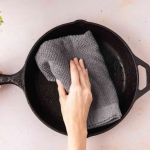 How Long Does Cast Iron Skillet Refinishing Take? Realistic Timeline for Restoration
 What to Avoid When Attempting Cast Iron Refinishing: Common Mistakes to Watch Out For