
Rust Under a Cast Iron Pan: Restore the Base and Stop the Moisture
On this page
Quick answer
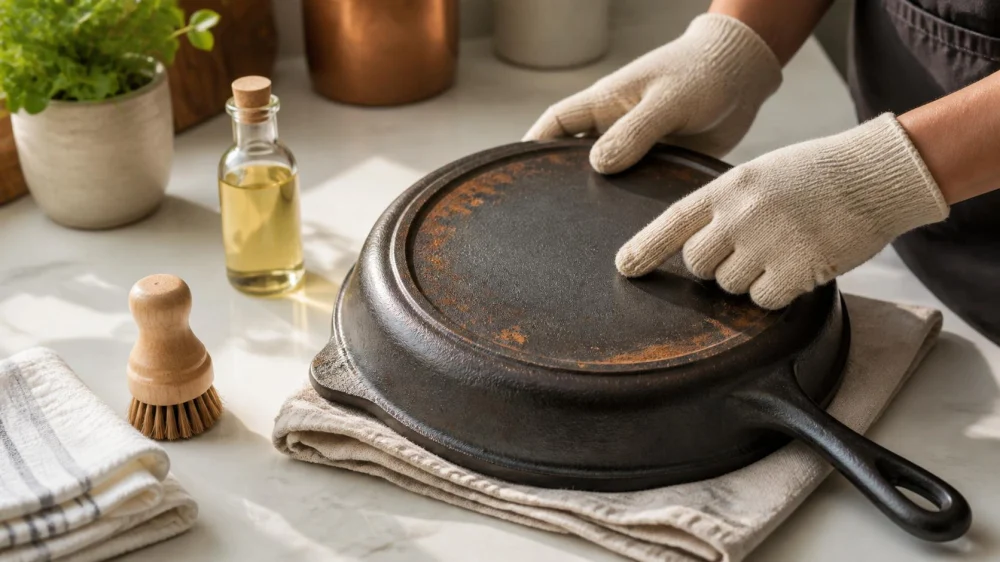
Rust on the underside of a cast iron pan usually means the base stayed damp or its protective oil film wore away. Wash and scrub the affected exterior, rinse, dry immediately with heat, apply an extremely thin film of suitable seasoning oil to every bare surface, and bake according to the cookware maker’s guidance. Also fix the storage or cooktop moisture that caused it.
Surface rust is often recoverable. Stop if you find a crack, loose unknown coating, deep material loss, a rocking base, or contamination you cannot identify.

Carefree Koatings / miracle method louisville ky
8919 Renetta Ct, Cincinnati, OH 45251, USA
Inspect the full pan
Let the pan cool completely and examine it in bright light. Check the cooking surface, sidewalls, helper handle, main handle, rim, maker marks, heat ring, and base. Photograph marks before aggressive cleaning; they can help identify the pan and its original finish.
Look for orange powder, dark scale, flaking seasoning, pits, cracks, wobble, sharp edges, or residue transferred from a burner or trivet. A red-brown mark on a towel suggests active rust, while smooth dark seasoning may be stable. Do not grind away metal merely to make the color uniform.

Miracle Method Surface Refinishing / miracle tub refinishing
Santa RosaSonoma CountyCalifornia
3200 Dutton Ave Suite #325, Santa Rosa, CA 95407, USA
Clean the rusted base
- Use warm water, dish soap, and a firm nylon brush or non-aggressive scrubber to remove grease and loose residue.
- For remaining surface rust, use fine steel wool or another method permitted by the manufacturer, working only until loose corrosion is removed.
- Keep the pan supported on a stable counter; protect sinks and counters from its weight and rough base.
- Rinse away particles and inspect again. Repeat locally rather than stripping sound seasoning from the entire pan.
- If the surface has heavy scale, deep pitting, cracks, unknown coatings, or a history of non-food use, stop and seek experienced evaluation.
Never mix cleaning chemicals. Avoid power tools unless you have the skill, protective equipment, and a clear reason; they can erase marks, change the surface, create dust, or hide damage.
Dry and reseason
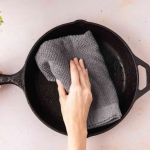
Dry the pan at once with a clean towel, then warm it gently on a stable burner or in the oven until all visible moisture is gone. Use heat-resistant gloves and remember that handles become hot. Let it cool enough to handle safely.
Rub a food-compatible seasoning oil over the base, walls, rim, handles, and cooking surface, then wipe repeatedly until the pan looks almost dry. Thick oil tends to become sticky or uneven. Place the pan in the oven as the manufacturer recommends, provide ventilation, and keep children and pets away from hot cookware. After cooling, check that the base is dry and leaves no oily or rusty transfer.
Prevent a repeat
After washing, dry the entire pan—including the base, heat ring, handles, and lid contact points—before storage. Do not leave it on a wet sink mat, damp towel, cooling glass cooktop, outdoor table, or humid cabinet. Use a dry rack or spacer so air can reach both sides, and store lids with a gap.
Check for condensation above a dishwasher, near a kettle, or inside a poorly ventilated cabinet. On induction or glass cooktops, lift rather than slide the pan and wipe both surfaces before heating; trapped moisture and residue can mark the pan and cooktop. A very light protective oil film is useful only when it is clean, thin, and not turning rancid.
Restoration checklist
- Pan cooled and full exterior inspected
- Maker marks photographed before scrubbing
- Loose rust removed without unnecessary grinding
- Pan rinsed and dried immediately
- Thin oil film applied to all bare iron
- Seasoning completed with safe heat and ventilation
- Base checked for rust or oil transfer
- Storage moisture source corrected
Limitations
This process is for ordinary bare cast iron with superficial exterior rust. Enameled cookware, plated pieces, unknown coatings, severe pitting, cracks, warping, fire damage, or suspected chemical use need a different decision. When identity or food-contact safety is uncertain, do not cook in the pan.
FAQ
Why did only the bottom rust?
The base may sit against condensation, a damp mat, residue, or a cool cooktop while the cooking surface remains protected.
Must I strip the whole pan?
Usually not for a small exterior spot. Clean the affected area while preserving sound seasoning elsewhere.
Can I season only the bottom?
You can restore a localized exterior area, but inspect and lightly protect every exposed bare-iron surface.
Will the pan scratch my glass cooktop?
Rough residue and sliding can mark glass. Clean both surfaces and lift the pan; follow the cooktop and cookware instructions.
When should I retire it?
Stop using a pan with cracks, structural instability, severe material loss, or contamination that cannot be resolved.
Evidence notes
Established cast iron care guidance consistently centers on three controls: remove loose corrosion, dry the cookware completely, and maintain a very thin polymerized oil layer. Exact oven temperature, oil choice, and duration vary by manufacturer and product. The cookware maker’s instructions and the observed condition of the specific pan take priority.
Conclusion
Restoring the cooking surface while ignoring the base leaves the moisture cycle intact. Clean the underside with restraint, dry every contour, rebuild a thin protective layer, and change the storage condition that allowed rust to return.



 Carolinas Custom Kitchen & Bath Center4.0 (27 reviews)
 Madrid's Contracting5.0 (22 reviews)
 Capital Renovation & Construction Inc.5.0 (20 reviews)
 Gateway Porcelain Refinishing5.0 (1 reviews)
 SK Remodeling and Decorating Inc.5.0 (38 reviews)
 Crown Custom Cabinetry Inc4.0 (4 reviews)
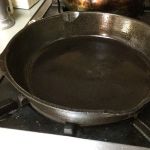 How to Refurbish a Cast Iron Skillet at Home: A Complete Guide
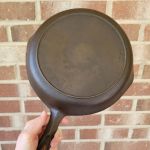 Best Products for Cast Iron Restoration Service: Top Tools and Products
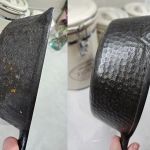 Simple At-Home Techniques for Cast Iron Restoration | Restore Your Cookware
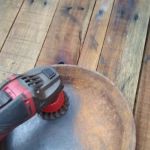 How to Restore Cast Iron at Home | A Complete Guide for Beginners
 How Long Does Cast Iron Skillet Refinishing Take? Realistic Timeline for Restoration
 What to Avoid When Attempting Cast Iron Refinishing: Common Mistakes to Watch Out For