
Rancid Smell on Cast Iron: Remove the Bad Oil Safely
On this page
Quick answer
A stale, paint-like, or rancid smell usually comes from excess or degraded oil, not from the iron itself. Wash the bare cast iron with hot water, dish soap, and a brush, dry it completely, and reassess. If odor or sticky buildup remains, remove failed seasoning with an appropriate method, then apply extremely thin fresh oil layers and heat safely.

Miracle Method of Tempe / miracle method of tempe
1635 W University Dr UNIT 126, Tempe, AZ 85281, USA
Identify the odor
Rancid oil can smell stale, waxy, bitter, fishy, or like old paint. Burned food, mildew from damp storage, dish detergent residue, smoke, or contamination from a cabinet can smell different. Inspect the pan cold and dry in fresh air.
Confirm that it is bare cast iron. Enameled cookware has different care instructions and should not be stripped or heated like bare iron.

Fort Worth Refinishing / fort worth bathtub refinishing
2627 S Cooper St Suite E12, Arlington, TX 76015, USA
Why oil turns rancid
Cooking oil oxidizes over time, especially when applied too thickly, stored warm, exposed to air, or left with food residue. A maintenance coat that looks glossy or feels tacky is often more oil than the surface needs.
Proper seasoning is polymerized oil bonded through heat, not a wet film. Poorly polymerized layers can remain soft and hold odor.
Start with normal cleaning
- Discard any food that contacted an off-smelling surface.
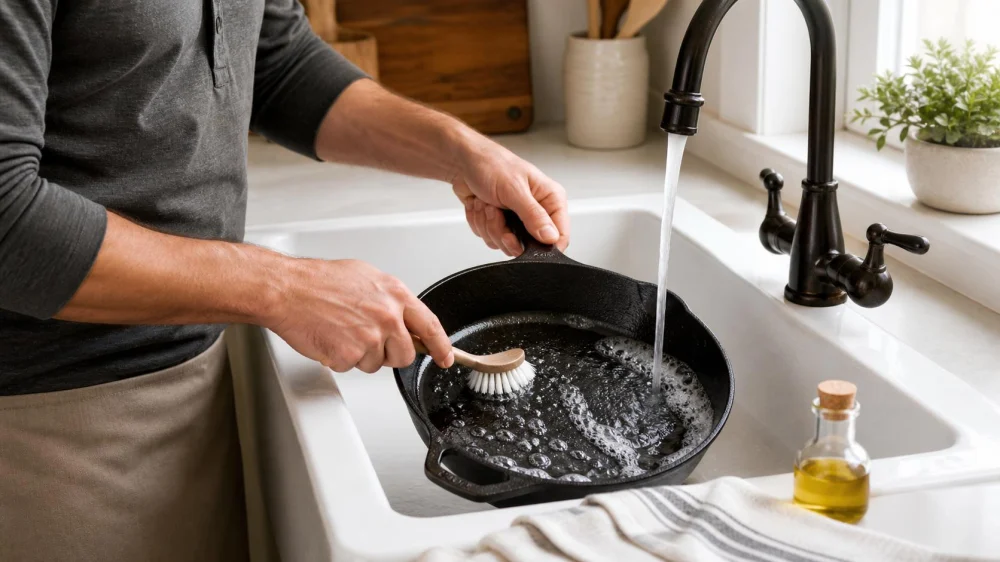
- Wash the cooled pan with hot water and ordinary dish soap.
- Scrub with a nylon brush or non-damaging pad.
- Rinse thoroughly.
- Dry immediately with a towel and gentle stovetop heat.
- Let it cool and smell the clean dry surface again.
Modern dish soap used by hand does not automatically ruin sound seasoning. Do not soak the pan or put it in a dishwasher.
Handle stubborn residue
If the surface stays sticky or smells after washing, failed oil may need removal. Coarse salt and gentle scrubbing can help with light residue. More extensive stripping should use a proven bare-cast-iron process.
Lye-based cleaners can remove seasoning but are caustic. Electrolysis involves electricity and chemical solution. Both require exact safety practices, protective equipment, ventilation, correct containers, and separation from children and pets. Never mix cleaners, and never use self-cleaning oven cycles as a casual shortcut because extreme heat can damage cookware and create smoke.
Dry completely
After cleaning, wipe the pan dry and warm it gently until all moisture evaporates. Watch for flash rust. If a light orange film appears, wipe or scrub it away promptly, rinse if needed, and dry again.
Use heat carefully: handles become hot, residual water can spit, and an unattended empty pan can overheat.
Reseason in thin layers
- Apply a small amount of suitable fresh cooking oil to warm dry iron.
- Wipe every surface, including the handle and exterior.
- Use a clean cloth to wipe again until the pan looks almost dry.
- Heat with good ventilation according to a reliable seasoning method.
- Cool safely and repeat only if a further thin layer is needed.
A thick shiny coat is not better. Excess oil is the common route back to stickiness and odor.
Prevent the smell from returning
- Clean food residue after each use.
- Dry completely before putting the pan away.
- Use only a nearly invisible maintenance film of fresh oil.
- Store in a dry, ventilated cabinet.
- Leave a lid ajar or use a clean spacer so moisture does not become trapped.
- Inspect cookware after long storage before cooking.
When to stop and reassess
Do not use cookware with an unknown chemical smell, suspected non-food coating, lead-use history, cracks, severe corrosion, or persistent contamination after cleaning. Seek professional restoration or testing for vintage pieces of uncertain history.
Smoke, headache, dizziness, breathing irritation, or a strong chemical odor during heating means stop, ventilate, leave fresh air as needed, and seek medical or poison-control advice for symptoms.
Important limitations
This article is general bare-cast-iron care information. Oil stability, cookware history, oven behavior, coatings, and sensitivities vary. Follow cookware and appliance instructions. Enameled cast iron, plated pieces, and cookware with wood or non-metal parts require different methods.
Sources and evidence notes
- Cast iron cookware manufacturers: hand washing, drying, seasoning, and storage guidance.
- USDA food-safety resources: cleaning, cross-contamination, and discarding questionable food.
- Poison Control: guidance for cleaner exposure, fumes, or unexpected symptoms.
- Oil chemistry and food-science references: oxidation and rancidity principles for edible fats.
Frequently asked questions
Can I cook the rancid smell away?
Do not mask or burn it off. Clean the pan, remove failed oil if needed, and start with fresh thin seasoning.
Will vinegar remove rancid oil?
Vinegar is used briefly for rust in some restoration methods, but it is not the primary fix for greasy polymerized buildup and can attack iron if overused.
Why does my pan smell after months in storage?
Residual food, excess surface oil, moisture, or cabinet odors may be responsible. Wash, dry, inspect, and reseason only if necessary.
Should seasoning feel oily?
No. A cooled seasoned surface should feel dry, not wet or tacky. Wipe off excess oil before heating.
Conclusion
A rancid cast iron smell usually signals old excess oil or failed seasoning. Begin with thorough hand washing, then strip only as much as necessary. Dry immediately and rebuild with fresh, nearly invisible oil layers. Good cleaning, complete drying, minimal oil, and ventilated storage prevent a repeat.




 REFINISHING PROS - Bathtub And Tile5.0 (121 reviews)
 STL Painting LLC4.0 (26 reviews)
 Decorative Coatings Refinishing4.0 (29 reviews)
 Fox Valley Home Services4.0 (24 reviews)
 Ferguson Full Circle3.0 (4 reviews)
 GSD Bathroom and Kitchen Remodeling San Jose5.0 (53 reviews)
 How to Refurbish a Cast Iron Skillet at Home: A Complete Guide
 Best Products for Cast Iron Restoration Service: Top Tools and Products
 Simple At-Home Techniques for Cast Iron Restoration | Restore Your Cookware
 How to Restore Cast Iron at Home | A Complete Guide for Beginners
 How Long Does Cast Iron Skillet Refinishing Take? Realistic Timeline for Restoration
 What to Avoid When Attempting Cast Iron Refinishing: Common Mistakes to Watch Out For