
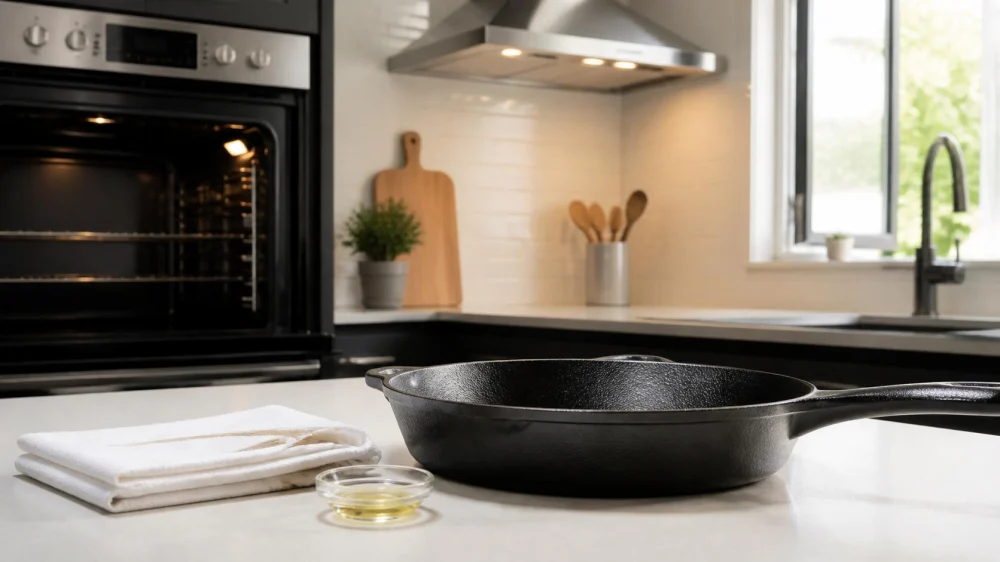
Oven Seasoning Cast Iron: Use a Thin Oil Layer and Ventilate
Table of contents
Quick answer
For bare cast iron, wash and dry the pan completely, rub an extremely thin film of cooking oil over every surface, wipe until it looks almost dry, and bake it upside down according to the cookware maker's temperature and time. Ventilate the kitchen, monitor the oven, cool the pan safely, and never use this method on enameled cookware.

Fort Worth Refinishing / fort worth bathtub refinishing
2627 S Cooper St Suite E12, Arlington, TX 76015, USA
When oven seasoning helps
Seasoning is a bonded layer of polymerized oil that helps protect bare iron. Oven seasoning can help a newly restored, dull, gray, lightly rusted, or uneven bare cast iron pan. It is not required after every use, and it cannot repair a crack, deep structural pitting, a loose handle, or damaged enamel.
First identify the cookware. Bare iron usually has the same dark metal texture inside and out. Enameled cookware has a smooth glass-like coating and follows different care instructions.

Miracle Method Surface Refinishing / miracle tub refinishing
Santa RosaSonoma CountyCalifornia
3200 Dutton Ave Suite #325, Santa Rosa, CA 95407, USA
Step-by-step method
- Check the manufacturer's instructions and confirm that every knob, handle, and accessory is oven-safe at the required temperature.
- Wash the bare iron with warm, soapy water and rinse it.
- Dry it thoroughly with a lint-free cloth; gentle stovetop heat can remove residual moisture.
- Apply a very thin film of cooking oil inside and out.
- Wipe repeatedly with a clean cloth until no oil runs, beads, or pools.
- Place foil on a lower rack to catch drips, not on the oven floor.
- Set the pan upside down on a center rack and follow the maker's bake time and temperature.
- Turn off the oven and let the cookware cool before handling.
Lodge's current method uses a very thin coat, an upside-down pan, about one hour of baking, and cooling in the oven. Its listed temperature ranges differ by article, so the instructions for your specific cookware should control.
Smoke and fire safety
- Run the range hood and open a window when safe to do so.
- Keep children, pets, paper, towels, packaging, and aerosols away.
- Do not leave the process unattended or disable smoke and carbon-monoxide alarms.
- Use dry oven mitts and a clear, heat-safe landing area.
- If oil ignites, turn off heat if safe, keep the oven door closed, evacuate if needed, and call emergency services. Never throw water on an oil fire.
Troubleshoot the finish
A sticky or gummy surface usually points to excess oil or incomplete curing. Do not add another thick coat. Follow the manufacturer's troubleshooting directions; Lodge advises another oven cycle for sticky seasoning. Rust means moisture reached bare metal, so remove the rust using a maker-approved method, dry completely, and reseason.
Patchy color alone is not necessarily failure. Repeated cooking with a small amount of oil can gradually strengthen the finish.
Limitations
Oven temperatures, oils, smoke points, cookware finishes, and manufacturer directions differ. Residential ventilation also varies, and smoke can affect people with asthma or other sensitivities. This article is a general workflow, not a substitute for the instructions supplied with your cookware or oven.
FAQ
How much oil should I use?
Only enough to create a film. After wiping, the pan should look nearly dry and should not drip when tilted.
Why bake the pan upside down?
It helps reduce oil pooling on the cooking surface.
Can I season enameled cast iron?
No. Enamel does not use the same seasoning process as bare iron.
Must the pan smoke heavily?
No. Heavy smoke may signal excess oil or excessive heat. Follow the maker's method and ventilate.
Sources and evidence notes
- Lodge: The Science of Cast Iron Seasoning — thin oil, upside-down placement, oven timing, and cooling.
- Lodge: Cast Iron Troubleshooting — excess oil and sticky seasoning guidance.
- Le Creuset: Enameled Cast Iron Care — enamel does not require bare-iron seasoning.
Next steps
Confirm that the pan is bare cast iron, read its care guide, prepare ventilation and a safe cooling area, then use one nearly dry oil film. Record the oil, temperature, and result so the next cycle can be adjusted.




 Colibri Construction4.0 (59 reviews)
 Superior Home Renovations4.0 (16 reviews)
 Rob's Refinishing Inc4.0 (42 reviews)
 Miracle Method Surface Refinishing5.0 (48 reviews)
 Better Path Construction LLC5.0 (10 reviews)
 UpScale Kitchen & Bathroom Remodeling5.0 (16 reviews)
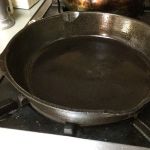 How to Refurbish a Cast Iron Skillet at Home: A Complete Guide
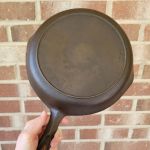 Best Products for Cast Iron Restoration Service: Top Tools and Products
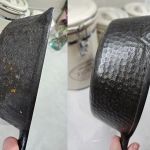 Simple At-Home Techniques for Cast Iron Restoration | Restore Your Cookware
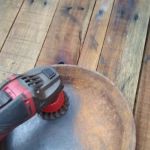 How to Restore Cast Iron at Home | A Complete Guide for Beginners
 How Long Does Cast Iron Skillet Refinishing Take? Realistic Timeline for Restoration
 What to Avoid When Attempting Cast Iron Refinishing: Common Mistakes to Watch Out For