
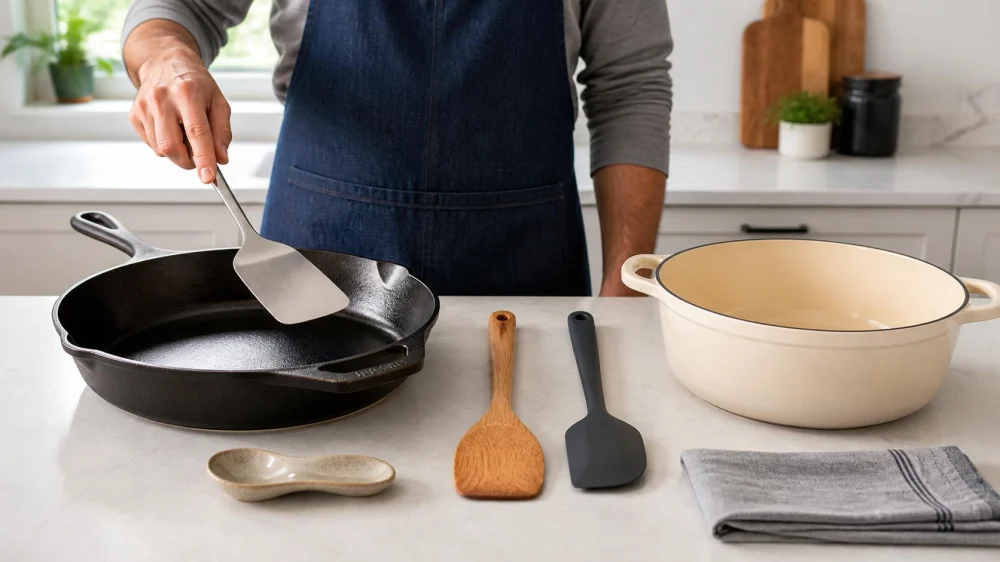
Metal, Wood, or Silicone Utensils on Cast Iron?
On this page
- Quick answer
- Start with bare or enameled cast iron
- When a metal utensil works well
- When wood is a practical choice
- When silicone adds flexibility
- Match edge shape to the cooking task
- Keep handles and materials away from excess heat
- What utensil marks mean for seasoning
- Clean utensils and the pan after cooking
- When to replace a damaged utensil
- Frequently asked questions
- Conclusion and next steps
Quick answer
On well-seasoned bare cast iron, a smooth-edged metal spatula is useful for searing and scraping, wood offers a firm gentle all-purpose edge, and heat-rated silicone works well for folding and curved sides. For enameled cast iron, follow the manufacturer and avoid tools that can chip or deeply scratch the coating. Whatever the material, reject sharp burrs, melting, cracks, loose parts, and surfaces that cannot be cleaned.
The cookware surface matters more than the word “cast iron.” Bare seasoned iron and glass-like enamel respond differently to hard edges, impact, and abrasive use.
Chicago Odorless Bathtub Refinishing / eco tub restoration
3236 W Eastwood Ave, Chicago, IL 60625, USA
Start with bare or enameled cast iron
Bare cast iron has an iron cooking surface protected by bonded layers of polymerized oil called seasoning. It can develop minor utensil marks and be renewed through cleaning, drying, and seasoning care.
Enameled cast iron has a fired coating over the metal. The coating does not need traditional seasoning and can chip if struck or scraped aggressively. Check the cookware maker’s utensil guidance before using metal.
Miracle Method of Tempe / miracle method of tempe
1635 W University Dr UNIT 126, Tempe, AZ 85281, USA
When a metal utensil works well
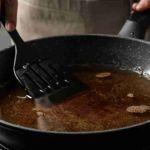
A thin smooth metal spatula can slide under seared food, turn delicate edges, lift a burger, and loosen browned bits on bare cast iron. Used flat against the cooking surface, it can help remove small high spots without relying on a sharp corner.
Choose rounded, polished edges without burrs. Do not chop, stab, hammer, or lever against the pan. Avoid metal on enameled cookware unless its manufacturer permits the specific use, and never bang the utensil against the rim.
When wood is a practical choice
Wooden spoons and spatulas are firm enough to stir thick sauces and scrape food while being gentler on enamel and seasoning. They do not conduct heat as quickly as metal, but the working end can still char if left in a hot pan.
Wash and dry wood according to its care instructions. Replace it when deep cracks, splinters, persistent odors, loose laminated layers, or burned areas make cleaning difficult.
When silicone adds flexibility
Flexible silicone can follow curved walls, fold eggs, scrape batter, and collect sauce from corners. A single-piece design can be easier to clean than a removable head that traps food.
Check the product’s heat-use instructions. Do not leave silicone touching the hot pan or burner, and discard a utensil that becomes sticky, swollen, cut, melted, or separated from its core.
Match edge shape to the cooking task
- Thin turner: gets beneath fish, eggs, pancakes, and seared foods.
- Wide spatula: supports burgers, sandwiches, and larger portions.
- Rounded spoon: stirs beans, sauces, and stews without sharp corners.
- Flexible scraper: follows curved skillet or Dutch oven walls.
- Tongs: turn pieces without dragging, but tips should be smooth and aligned.
- Whisk: mixes liquids; coated or smooth wires may be preferable for enamel.
Use the least force needed. Food release depends on heat, fat, timing, and surface preparation as well as the utensil.
Keep handles and materials away from excess heat
Do not leave any utensil resting in the pan. Metal handles can become hot, wood can scorch, and silicone or plastic can soften outside their approved use. Turn handles away from adjacent burners and open flame.
Place the utensil on a clean heat-safe rest so grease does not spread across the counter. Use an oven mitt for a metal handle that has been near the pan or inside an oven.
What utensil marks mean for seasoning
Faint grey or brown streaks after using a smooth metal tool may be transferred metal, loosened food residue, or a thin seasoning mark. Clean and dry the pan, then inspect in good light. A stable cooking surface should not release thick black flakes.
If seasoning peels, feels sticky, or exposes rust, address the cleaning, oil thickness, and heat process rather than blaming the utensil alone. Deep gouges from a burr or sharp corner mean the tool needs repair or replacement.
Clean utensils and the pan after cooking
Remove food while the pan is warm enough to clean safely but not dangerously hot. Use water, an appropriate brush or scraper, and a small amount of suitable dish soap when needed. Dry bare cast iron promptly and apply a very thin protective oil layer if that is part of your care routine.
Wash utensils according to their material. Hinges, hollow handles, seams, removable heads, and wood grain can trap food. Prevent cross-contamination after raw meat by using clean tools for cooked food.
When to replace a damaged utensil
- metal edge has a burr, crack, rust pocket, or loose rivet;
- wood is split, splintered, delaminated, or cannot be cleaned;
- silicone is cut, sticky, melted, swollen, or pulling from its core;
- a detachable head repeatedly loosens during use;
- the handle no longer supports the load safely;
- odor or residue remains after correct cleaning.
Do not sand or reshape a food-contact tool unless the maker provides a safe repair process.
Frequently asked questions
Will a metal spatula ruin cast iron seasoning?
A smooth tool used normally on stable bare-iron seasoning should not ruin it. Sharp edges, chopping, heavy scraping, or weak seasoning can cause damage.
Is wood always safest for enameled cast iron?
Wood is generally gentle, but follow the cookware instructions and reject splintered or dirty tools. Silicone may also be suitable.
Can nylon utensils be used?
Only within their manufacturer’s heat and use limits. Keep them away from burners and discard any tool that melts, warps, or roughens.
Why does food stick even with a thin metal turner?
The food may need more time to release, or heat, oil, moisture, and surface preparation may need adjustment. Forcing the tool can tear food and seasoning.
Conclusion and next steps
Identify whether the pan is bare or enameled, then match the tool to the cooking task. Use polished metal for thin lifting on bare iron, wood for firm gentle stirring, and heat-rated silicone for flexible scraping. Keep every utensil out of prolonged heat, clean seams and handles thoroughly, and replace burrs, cracks, melting, or loose parts before the next cook.



 BATHMAN REFINISHING LLC - BATHTUB & TILE Refinishing, Reglazing, Resurfacing, Restoration4.0 (40 reviews)
 Miracle Method Surface Refinishing4.0 (70 reviews)
 Mohawk Renovations, LLC5.0 (5 reviews)
 SurfaceKote LLC5.0 (72 reviews)
 Renovision Design & Build5.0 (40 reviews)
 StefRenov Remodeling5.0 (39 reviews)
 How to Refurbish a Cast Iron Skillet at Home: A Complete Guide
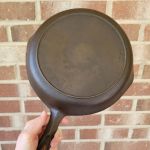 Best Products for Cast Iron Restoration Service: Top Tools and Products
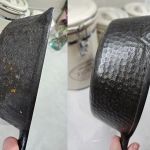 Simple At-Home Techniques for Cast Iron Restoration | Restore Your Cookware
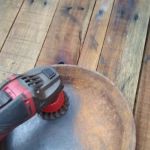 How to Restore Cast Iron at Home | A Complete Guide for Beginners
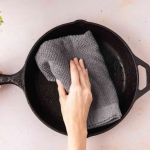 How Long Does Cast Iron Skillet Refinishing Take? Realistic Timeline for Restoration
 What to Avoid When Attempting Cast Iron Refinishing: Common Mistakes to Watch Out For