
Is Vintage Cast Iron Safe to Cook With? A Check Guide
On this page
Quick answer
Do not cook with vintage cast iron until you confirm it is structurally sound, intended for food, and free of unknown coatings or contamination. Retire pieces with cracks, holes, severe thinning, or uncertain industrial use. Visual inspection cannot rule out lead. If a pan may have melted lead or held chemicals, use qualified testing or keep it as display rather than relying on seasoning or cleaning.

Miracle Method Surface Refinishing / miracle refinish tubs
Santa RosaSonoma CountyCalifornia
3200 Dutton Ave Suite #325, Santa Rosa, CA 95407, USA
Why history matters
Unknown-use cookware is a vessel whose prior contents, heat exposure, repairs, coatings, and storage cannot be reliably established. Old cast iron was not always used for food; small pots and ladles may have held lead for fishing weights, ammunition, plumbing, crafts, or industry.
Seasoning can improve cooking performance, but it does not prove the metal is uncontaminated and cannot repair a structural crack.
Fort Worth Refinishing / fort worth bathtub refinishing
2627 S Cooper St Suite E12, Arlington, TX 76015, USA
Visual and structural checks
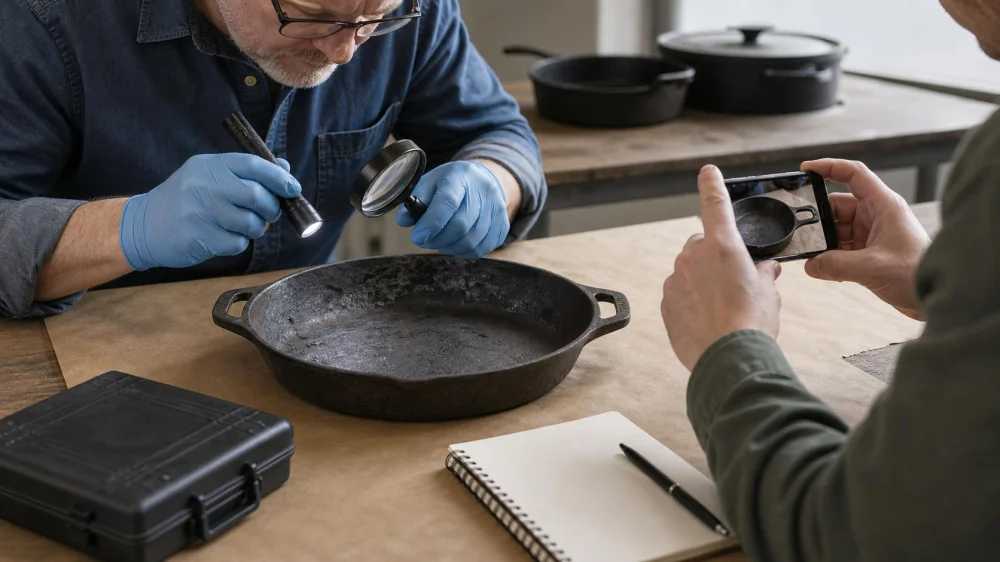
- Photograph markings, size, handle, base, lid, and interior before cleaning.
- Look under good light for cracks, especially around handles, heat rings, corners, and pour spouts.
- Check for holes, deep pitting, sharp thinning, warping, or welded and brazed repairs.
- Identify paint, enamel, plating, residues, unusual colours, or a powdery surface.
- Smell only from a normal distance; do not heat unknown residues to identify them.
- Research maker marks and original purpose using reliable catalogues or an experienced collector.
A ringing sound, magnet, colour, or age alone is not a safety test. When damage is uncertain, consult a restoration professional familiar with food-contact cookware.
Lead and unknown-metal risk
Lead has no known safe exposure level. Cast iron itself is ferrous, but a vessel can be contaminated by material melted in it, solder, a repair, surface coating, dust, or storage. Children, pregnant people, and developing fetuses are especially vulnerable.
Possible clues include silvery residue, droplets in pores, an oddly coated interior, or a history near fishing, firearms, printing, stained glass, or plumbing work. Their absence does not prove safety. Do not grind, sandblast, burn, or heat a suspect piece because dust and fumes can spread contamination.
Testing options and limits
Consumer lead swabs vary in substrate, sensitivity, false-positive, and false-negative performance. EPA recognition of certain kits relates to the federal Renovation, Repair and Painting program and specified building substrates; it is not blanket certification that a pan is food-safe.
For meaningful decisions, ask an accredited laboratory or qualified environmental professional about appropriate surface, coating, or leach testing. Handheld X-ray fluorescence can screen metals but operator, calibration, geometry, coating thickness, and interpretation matter. A negative result from one spot may not represent the whole pan.
Cook, restore, test, or display?
- Consider cooking after appropriate cleaning and seasoning: verified food cookware, sound structure, ordinary rust or failed seasoning, and no contamination clues.
- Seek professional restoration: valuable piece with heavy rust, uncertain coating, deep but assessable pitting, or complex parts.
- Test before any abrasive work: unclear history, suspicious silvery residue, repairs, paint, or possible non-food use.
- Display only: confirmed lead or chemical use, unresolved testing uncertainty, cracks, severe thinning, holes, or decorative-only origin.
When to avoid: if reliable testing costs more than the cookware’s practical value and history remains unknown, choosing modern food-grade cookware is the safer decision.
Cleaning boundaries
Ordinary rust and old seasoning can often be removed with suitable mechanical or chemical methods, followed by thorough washing, drying, and reseasoning. Match the method to the object and protect skin and eyes.
Cleaning is not decontamination proof. Vinegar, lye, electrolysis, fire, and seasoning should not be assumed to remove lead or unknown chemicals. Never mix cleaners, and do not use food-preparation sinks or ovens for suspect contaminated objects.
Pre-cooking checklist
- I identified the object as cookware intended for food.
- I documented and researched its history and markings.
- No cracks, holes, severe thinning, or unsafe repairs are present.
- No paint, plating, silvery residue, or unknown coating remains.
- Contamination concerns were resolved by appropriate expertise or testing—not appearance alone.
- The piece was cleaned using a suitable method and all residues removed.
- The pan was dried, seasoned, and heated empty only after safety questions were resolved.
- I will discard food and stop using it if unusual residue, odour, flaking, or structural change appears.
Limitations and health notes
This guide cannot certify a specific object. Laboratories, public health departments, environmental professionals, cookware restorers, and clinicians answer different parts of the question. Testing availability and interpretation vary.
If you believe food was prepared in lead-contaminated cookware or someone may have been exposed, stop use and contact a healthcare provider or local public health department. Lead exposure often has no obvious immediate symptom; medical testing decisions belong to clinicians.
Frequently asked questions
Can seasoning seal lead inside cast iron?
No. Seasoning is not a validated containment system for lead or unknown chemicals. Confirm safety before seasoning for food use.
Does a home lead swab prove a pan is safe?
No. It may provide limited screening when used correctly, but substrate, sampling, and test performance matter. EPA recognition for renovation work is not foodware certification.
Is all old cast iron dangerous?
No. Many vintage pans have long food-use histories and can be restored. The decision depends on identity, condition, prior use, coatings, and contamination evidence.
Can I remove lead by grinding the pan?
Do not attempt it. Grinding can spread contaminated dust and may not remove material from pores or all surfaces. Seek professional advice.
Sources and evidence notes
Lead-risk boundaries follow FDA’s lead in food and foodwares guidance and EPA’s explanation of consumer test-kit limitations. Neither source certifies a particular vintage pan.
Next steps
Set the piece aside without heating or abrasive cleaning. Photograph all surfaces and markings, research its intended use, and list contamination clues. If history cannot rule out lead or chemicals, contact a qualified laboratory or environmental professional—or designate the piece for display and use known food-grade cookware.


 MSZ-CONSTRUCTION CO.5.0 (1 reviews)
 Bath Pros NW4.0 (185 reviews)
 HighQuality Bathroom Remodeling5.0 (38 reviews)
 DR Design & Remodel, Flooring, Tile, Cabinetry & More4.0 (3 reviews)
 Miracle Method Surface Refinishing4.0 (202 reviews)
 Exquisite Services Inc4.0 (46 reviews)
 How to Refurbish a Cast Iron Skillet at Home: A Complete Guide
 Best Products for Cast Iron Restoration Service: Top Tools and Products
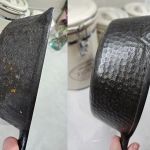 Simple At-Home Techniques for Cast Iron Restoration | Restore Your Cookware
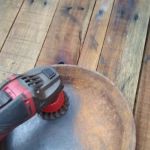 How to Restore Cast Iron at Home | A Complete Guide for Beginners
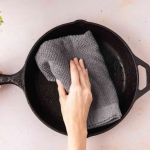 How Long Does Cast Iron Skillet Refinishing Take? Realistic Timeline for Restoration
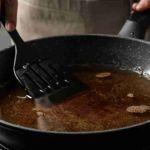 What to Avoid When Attempting Cast Iron Refinishing: Common Mistakes to Watch Out For