
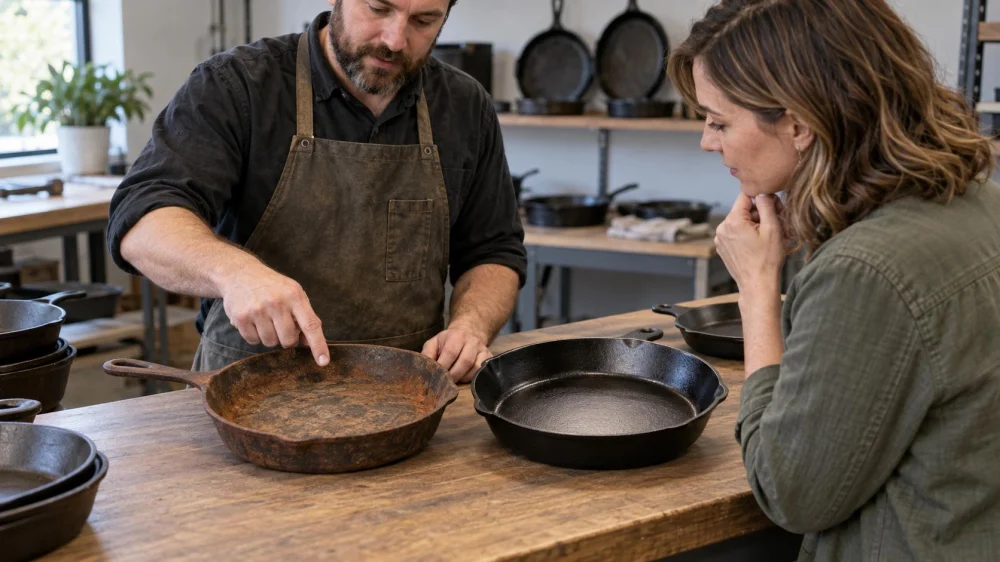
Cast Iron Restoration Service: Define the Food-Use Finish
On this page
Quick answer
Before hiring a cast iron restoration service, state whether the item is intended for cooking, display, or collection, and ask how the provider identifies coatings, cracks, contamination, and historic features. Get the cleaning method, material removal, final finish, food-use statement, shipping responsibility, price, timing, and irreversible changes in writing before authorizing work.

Surface Specialists of South Central MN / surface specialists mn
MankatoBlue Earth CountyMinnesota
436 Lyd Blvd, Mankato, MN 56001, USA
Define the result before choosing a method
A restoration finish is the condition the provider agrees to return: cleaned bare iron, a new seasoning layer, conserved original surface, display preparation, or another documented result. Cosmetic uniformity does not by itself prove food suitability, structural integrity, authenticity, or cooking performance.
This checklist is for US owners comparing services for cast iron cookware or collectible pieces. It does not certify a provider or establish that an unknown item is safe for food. Valuable, historic, coated, repaired, or possibly contaminated pieces may need specialist assessment.

Miracle Method Surface Refinishing / miracle method boulder
Santa RosaSonoma CountyCalifornia
3200 Dutton Ave Suite #325, Santa Rosa, CA 95407, USA
Practical checklist
- Intended use: active cooking, occasional cooking, display, research, resale, or collection.
- Clear photographs, dimensions, weight, maker marks, damage, coatings, and known history.
- Provider identity, relevant experience, insurance, references, and examples of comparable work.
- Inspection method for cracks, repairs, warping, deep pits, coatings, and unknown residue.
- Authorized removal, cleaning, heat, chemical, electrolysis, abrasion, and seasoning methods.
- Final surface, oil ingredients, fragrance or allergen concerns, care instructions, and limitations.
- Packing, freight, loss, damage, turnaround, price, changes, return, and complaint terms.
Step-by-step plan
- Ask the provider to review photographs before shipping and list conditions that may change the quote or stop the work.
- Request a written scope naming what will be preserved, removed, tested, replaced, or left unresolved.
- Confirm whether maker marks, casting texture, machining, patina, repairs, and collectible evidence could be altered.
- Discuss the specific seasoning product and whether the provider makes any food-use representation for the finished item.
- Use tracked, weight-appropriate packing and document every surface before handoff when shipping is accepted.
- Inspect the returned item before cooking, compare it with the scope, and follow the supplied first-use and care limits.
Keep original and return photographs, the scope, product disclosures, shipping weights, tracking, messages, invoice, care instructions, and warranty. Do not describe an unknown or untested piece as food-safe merely because it looks clean.
Limits and important notes
Avoid providers who promise to erase every pit, use unexplained proprietary chemicals, ignore cracks or coatings, or guarantee safety without defining evidence. Aggressive blasting, grinding, high heat, or polishing can permanently change dimensions, texture, marks, and collectible value.
Pause if the provider discovers a crack, repair, unknown coating, unusual residue, severe loss, or a process conflict. Seek a qualified conservator, materials laboratory, cookware specialist, or health authority as appropriate rather than asking a routine refinisher to guess.
Frequently asked questions
Does black seasoning prove the pan is ready to cook?
No. Color alone does not establish cleanliness, material identity, structural condition, or suitability for food use.
Should a collectible pan look new?
Not necessarily. Removing patina, marks, or surface evidence can reduce historic or collectible value. Define conservation goals first.
Can a service remove deep pitting?
Material removal has limits and consequences. Ask what would be removed and whether the cooking surface or thickness would change.
Who is responsible during shipping?
The written terms should allocate packing, carrier selection, declared value, claims, delay, and return responsibility.
What should arrive with the pan?
Request the completed scope, methods and products used, unresolved conditions, care instructions, and invoice.
Sources and evidence
Evidence note: this guide applies common conservation, consumer-service, food-contact, chain-of-custody, and shipping principles. Only an assessment of the actual item and process can support a decision about use.
Conclusion and next steps
Define the intended use and preservation goals, document the piece, and compare providers on inspection, methods, irreversible changes, final finish, records, and custody. Authorize only a clear written scope and inspect the returned item before relying on it for cooking.





 A&E Bathtub Refinishing Inc.4.0 (29 reviews)
 Revitalize Refinishing, LLC4.0 (6 reviews)
 DG Construction And Renovations5.0 (5 reviews)
 TrueSpace Bath & Basement Finishing5.0 (42 reviews)
 VVL Bathroom Remodeling Contractors5.0 (27 reviews)
 Stone Renovations and Trim Company5.0 (18 reviews)
 How to Refurbish a Cast Iron Skillet at Home: A Complete Guide
 Best Products for Cast Iron Restoration Service: Top Tools and Products
 Simple At-Home Techniques for Cast Iron Restoration | Restore Your Cookware
 How to Restore Cast Iron at Home | A Complete Guide for Beginners
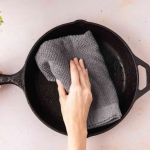 How Long Does Cast Iron Skillet Refinishing Take? Realistic Timeline for Restoration
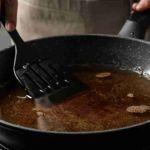 What to Avoid When Attempting Cast Iron Refinishing: Common Mistakes to Watch Out For