
Cast Iron Pan Wobbles: Check Warping Before Restoration
On this page
Quick answer
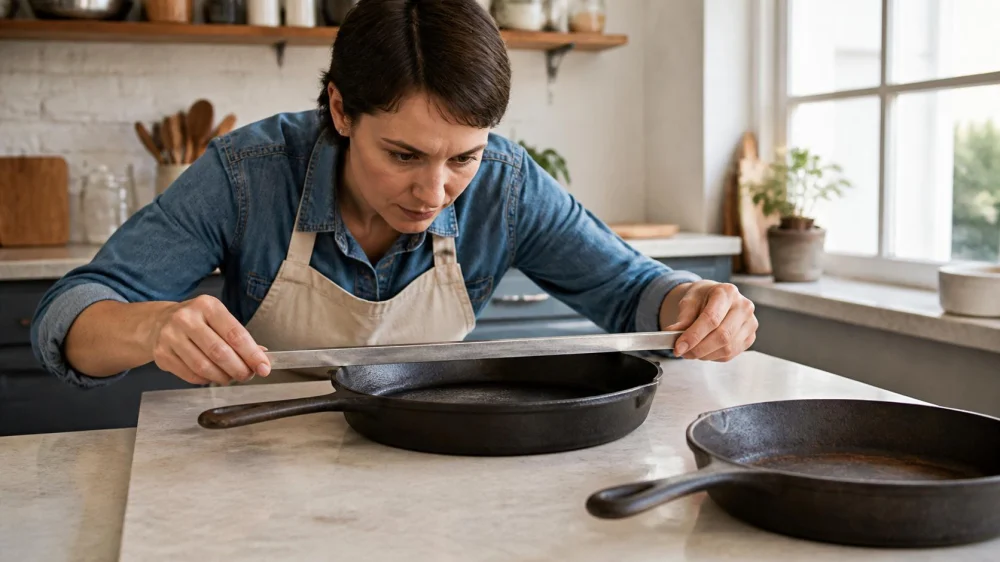
If a cast iron pan wobbles, let it cool completely, clean the base, and test it on more than one known-flat surface. Observe rocking, spinning, gaps, and handle movement without forcing the pan. Compare the cooking surface with a straightedge. Warping cannot usually be corrected by cleaning or seasoning, so assess usability and value before paying for cosmetic restoration.
America Refinishing Pros / america refinishing pros
9510 SW 137th Ave, Miami, FL 33186, USA
Separate pan and surface
A wobble does not prove the pan is warped. Debris, a raised maker mark, a heat ring, a textured base, an uneven grate, or a cooktop that is not level can change how a pan sits. Some vintage designs were not intended to make full contact with a smooth glass surface.
Identify whether the pan has a flat base or heat ring. Remove loose residue from the cold exterior without grinding away original metal or marks. Test on a stable reference surface, then repeat in a different orientation and location. If only one worktop produces rocking, investigate the surface before blaming the cookware.

Surface Specialists of South Central MN / surface specialists mn
MankatoBlue Earth CountyMinnesota
436 Lyd Blvd, Mankato, MN 56001, USA
Inspect a cool pan
Place the empty, room-temperature pan gently on the reference surface. Press lightly at alternating rim points and note movement. Rotate the pan and repeat. A pan that spins readily may have a convex area; a pan with a visible centre gap may be dished in another direction.
Lay a straightedge across multiple directions on the cleaned cooking surface without scraping it. Look for changing light gaps rather than expecting a perfectly machined result. Photograph the straightedge position, base, rim, handle connection, heat ring, and any maker marks. These records help a restorer distinguish design, wear, and deformation.
Inspect for cracks at the rim, wall, handle root, pour spouts, and heat-ring transitions. A crack is a separate safety and structural issue; do not keep heating a questionable pan simply to see whether it changes shape.
Consider cooking performance
Small movement on a gas grate may matter less than unstable contact on a smooth electric or induction cooktop. A warped base can heat unevenly, rotate while stirring, make oil pool, or scratch a surface if the pan is slid. Cooktop manufacturers may specify cookware-base requirements.
Do not use high heat, sudden cooling, hammering, clamps, or heavy presses as an improvised flattening test. Cast iron is brittle, and aggressive force or thermal shock can create cracks, worsen distortion, or injure the user.
Plan restoration carefully
Removing rust and old seasoning may reveal the shape more clearly, but new seasoning does not flatten metal. Ask a professional restorer to document wobble, spin, cracks, deep pitting, and cooking-surface condition before work. For collectible cookware, also discuss how abrasive methods or machining may affect marks and value.
Decide whether the goal is display, occasional cooking, use on a particular stove, or resale. A pan can be visually restored yet remain unsuitable for the intended cooktop. Put the desired outcome and stop conditions into the quote.
Inspection checklist
- Pan completely cool, empty, and clean.
- Base type and maker marks documented.
- Two stable reference surfaces checked.
- Rocking, spinning, and gap locations recorded.
- Interior checked in multiple directions.
- Rim, walls, handle root, and heat ring inspected.
- Intended cooktop requirements reviewed.
- Restoration goal and limits agreed.
Limitations and safety notes
This guide does not certify cookware safety, food-contact suitability, collector value, or structural integrity. Surface design and acceptable flatness vary. Stop using cookware with a suspected crack, loose handle, severe instability, unknown contamination, or damage you cannot assess. Consult the cookware or cooktop manufacturer and an experienced restorer when appropriate.
FAQ
Can seasoning fix a warped pan?
No. Seasoning is a thin protective cooking layer; it does not reshape the iron.
Does spinning always mean warping?
No. A raised mark, heat ring, debris, base design, or uneven surface can contribute. Repeat a controlled cool-pan check.
Can I hammer cast iron flat?
That risks cracking brittle iron and damaging the surface. Do not use impact as a home correction method.
Is a slightly warped skillet still usable?
It depends on stability, cracks, intended cooktop, heat behaviour, and manufacturer guidance. Evaluate those factors rather than wobble alone.
Evidence notes
This guide uses basic condition-assessment controls: a cool clean object, repeatable reference surfaces, observations from several directions, crack inspection, intended-use review, and documentation before treatment. It does not set a universal flatness tolerance.
Next steps
Make a short photo record of the cold pan on two stable surfaces. Note wobble, spin, gaps, cracks, base design, and intended cooktop, then share those observations with a restorer before approving cleaning, seasoning, or any irreversible treatment.


 Fox Valley Remodeling, Inc.0.0 (0 reviews)
 M&M Home Remodeling Services - CP4.0 (445 reviews)
 The Professional Bathtub Refinishing Association5.0 (1 reviews)
 Matthew James & Co.5.0 (5 reviews)
 S.N. Peck Builder, Inc.5.0 (1 reviews)
 The Kitchen & Bath Store at Benson Stone4.0 (22 reviews)
 How to Refurbish a Cast Iron Skillet at Home: A Complete Guide
 Best Products for Cast Iron Restoration Service: Top Tools and Products
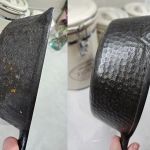 Simple At-Home Techniques for Cast Iron Restoration | Restore Your Cookware
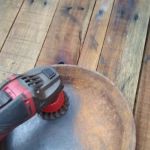 How to Restore Cast Iron at Home | A Complete Guide for Beginners
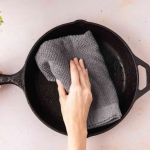 How Long Does Cast Iron Skillet Refinishing Take? Realistic Timeline for Restoration
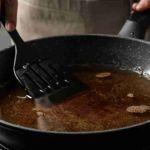 What to Avoid When Attempting Cast Iron Refinishing: Common Mistakes to Watch Out For