
Cast Iron Lid Condensation: Dry the Rim and Underside
On this page
Quick answer
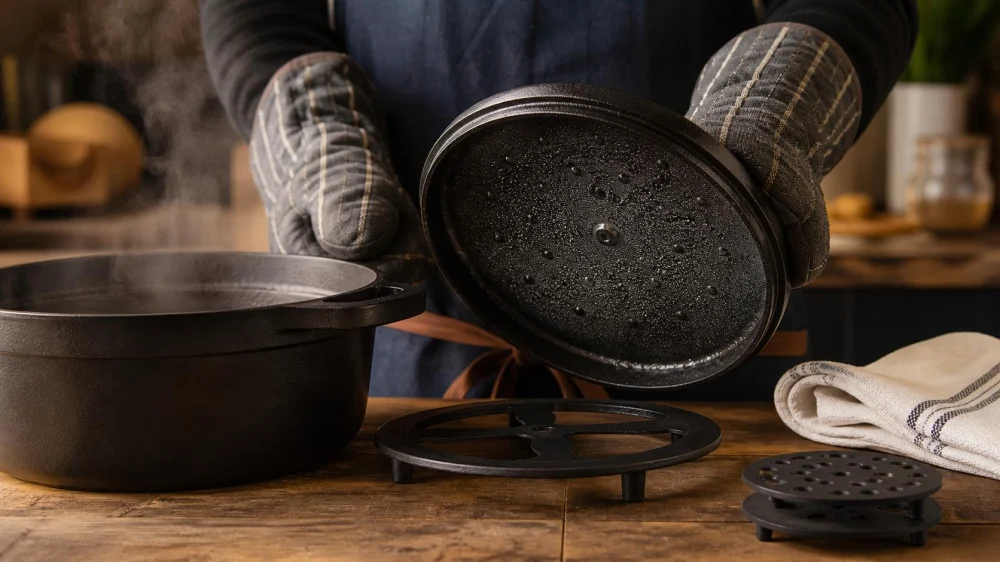
Cast-iron lids trap steam, so water collects on the underside, around the rim, and near self-basting points. Lift the lid away from your face, tilt condensation back into the food only when appropriate, and place the hot lid on a stable heat-safe surface. After cooking, wash by the cookware’s instructions, dry every edge and knob area, warm gently if appropriate, and store with airflow.
Bare and enameled lids need different care. Do not season enamel or ignore chips, cracks, loose knobs, or sharp edges.
Chicago Odorless Bathtub Refinishing / eco tub restoration
3236 W Eastwood Ave, Chicago, IL 60625, USA
Why lids collect moisture
Steam from food meets the cooler lid and condenses. Raised points or rings may redistribute droplets over the dish. Moisture can also settle in the lid’s rim, around a metal knob, or between a lid and pot after heat is turned off.
On bare iron, water left after cooking or washing can start rust. On enamel, trapped moisture can affect exposed rims, damaged areas, or hardware even though the intact glazed surface itself is nonreactive.

America Refinishing Pros / america refinishing pros
9510 SW 137th Ave, Miami, FL 33186, USA
During cooking
- Use dry, secure oven mitts sized for the lid and knob.
- Assume every metal part is hot, including decorative knobs.
- Stand to the side and lift the far edge first so steam moves away.
- Hold the lid level or tilt droplets deliberately based on the recipe.
- Place it on a stable trivet large enough to support the full lid.
- Keep handles turned away from children and traffic.
- Do not place hot iron on a wet, cold, or fragile surface.
Heavy lids can strain wrists. Use two protected hands when the design allows and ask for help with very large cookware.
After cooking
Transfer leftovers to suitable storage rather than sealing them in bare cast iron. Let the lid cool enough to avoid thermal shock while not leaving condensation trapped for hours. Wash with the manufacturer-approved brush, soap, and water method.
Dry the cooking surface, underside, upper surface, rim, handle, knob, screw recess, and self-basting features. For bare iron, gentle warming can evaporate moisture; then apply an extremely thin coat of appropriate oil if the surface needs it. Cool fully before storage.
If rust appears
Light surface rust on sound bare iron can often be removed with a cookware-safe abrasive method, followed by washing, complete drying, and thin reseasoning. Work gradually so detail and fit are preserved.
Stop using a lid with cracks, loose fragments, structural damage, or an unstable knob. Do not use power tools or a self-cleaning oven on unknown vintage coatings, and do not coat over active rust.
Enameled lids
Follow the enameled cookware maker’s cleaning and temperature instructions. Avoid metal scraping and rapid temperature changes. Inspect the interior, rim, and knob attachment for chips, cracks, looseness, or corrosion.
Do not apply seasoning oil to intact enamel as though it were bare iron. For exposed rims, use the manufacturer’s specified care. If interior enamel is chipped or flaking, stop and contact the maker about continued use.
Storage setup
- Store only when the lid and pot are completely dry and cool.
- Use a clean spacer or folded towel if recommended to allow airflow.
- Place the lid slightly ajar rather than sealing humidity inside.
- Support heavy lids securely so they cannot slide or fall.
- Protect enamel from impacts and metal-on-metal stacking.
- Keep cookware away from sinks, damp basements, and dishwasher steam.
Check stored cookware periodically in humid climates or rarely used collections.
Frequently asked questions
Should condensation drip back into food?
That is often part of covered cooking, but follow the recipe and use safe lid-handling technique.
Can I dry a bare lid on the burner?
Gentle warming may help if the maker allows it. Avoid overheating and unattended cookware.
Why does rust form around the rim?
Moisture can remain in the narrow contact edge, especially when the lid is stored closed.
Can I put a hot lid in the sink?
No. Water and a cool sink can cause thermal shock, steam burns, or surface damage.
Should I oil the knob?
Knob materials vary. Follow product instructions rather than coating hardware automatically.
Sources and evidence notes
This guide uses condensation, thermal-shock, burn-prevention, drying, and corrosion-control principles. Exact cleaning, seasoning, oven-temperature, hardware, and enamel-care instructions vary by product.
Use current manufacturer instructions, especially for enameled cookware, removable knobs, and vintage pieces with unknown finishes.
Conclusion and next steps
Treat the lid as a hot, moisture-holding part of the cookware rather than an afterthought. Vent steam away, support the lid safely, and clean and dry every hidden edge. Store it cool with airflow, then inspect the rim and underside before the next cook so a few trapped droplets do not become a rust project.


 LT Design & Innovations0.0 (0 reviews)
 Mila's Restoration & Remodeling5.0 (82 reviews)
 Bath Fitter4.0 (156 reviews)
 PST Bathroom Remodeling & Remodeling Company5.0 (6 reviews)
 Cornerstone Inc.4.0 (43 reviews)
 Grand Restoration5.0 (18 reviews)
 How to Refurbish a Cast Iron Skillet at Home: A Complete Guide
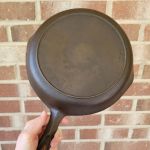 Best Products for Cast Iron Restoration Service: Top Tools and Products
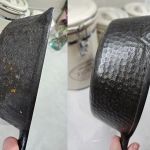 Simple At-Home Techniques for Cast Iron Restoration | Restore Your Cookware
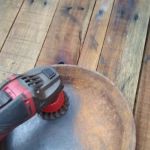 How to Restore Cast Iron at Home | A Complete Guide for Beginners
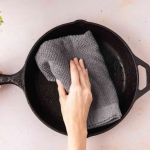 How Long Does Cast Iron Skillet Refinishing Take? Realistic Timeline for Restoration
 What to Avoid When Attempting Cast Iron Refinishing: Common Mistakes to Watch Out For