
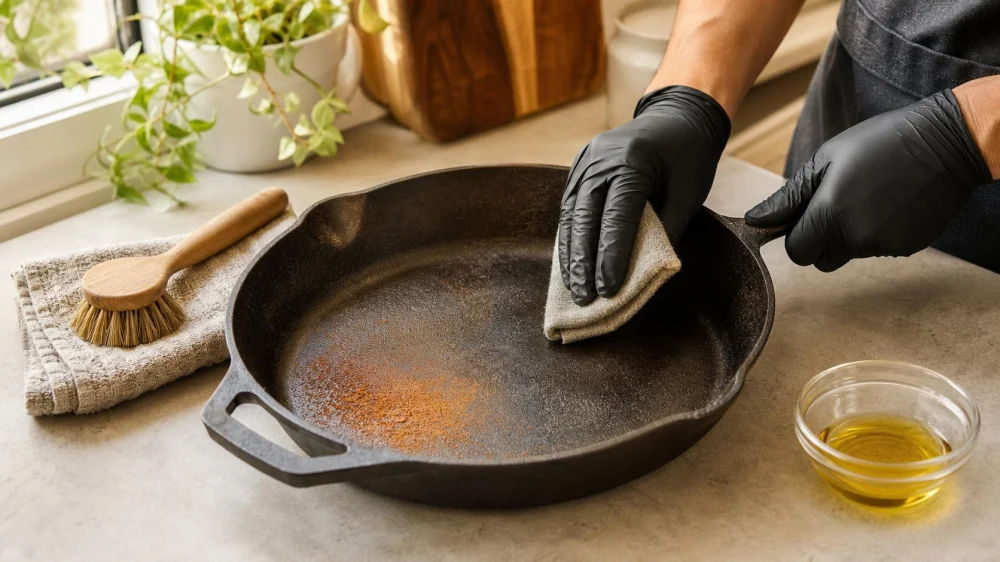
Cast Iron Flash Rust After Washing: A Recovery Guide
Table of contents
Quick answer
Flash rust is a thin orange film that can appear quickly when bare or weakly seasoned cast iron stays damp after washing. For a sound, uncoated pan, scrub the rust away with warm soapy water, rinse, dry immediately with a towel and gentle heat, then wipe on an extremely thin coat of cooking oil. Reseason if cleaning exposed broad bare areas.

Carefree Koatings / miracle method louisville ky
8919 Renetta Ct, Cincinnati, OH 45251, USA
What flash rust looks like
Fresh surface rust often appears orange, dusty, or streaky rather than thick and deeply scaled. It can form while a pan air-dries, after aggressive scrubbing removes seasoning, or in a humid kitchen. Lodge explains that cast iron is vulnerable when its protective carbonized-oil seasoning is missing and identifies soaking, dishwashers, air drying, and damp storage as common rust conditions.
Rust is different from brown baked-on food, sticky excess oil, or a patchy black seasoning layer. If material is raised, flaky, deeply pitted, or associated with a crack, the pan needs closer evaluation before cooking.
Chicago Odorless Bathtub Refinishing / eco tub restoration
3236 W Eastwood Ave, Chicago, IL 60625, USA
Identify the cookware before starting
- Seasoned bare cast iron: usually dark gray or black throughout, with no glass-like colored coating. The recovery steps below generally apply.
- Enameled cast iron: has a vitreous enamel cooking surface or colored exterior. Do not use metal scouring methods intended for bare iron; follow the enamel manufacturer's instructions.
- Unknown vintage cookware: identify coatings, repairs, cracks, and intended use before abrasive restoration. Decorative or industrial castings may not be food cookware.
- Cracked or severely warped cookware: stop using it. Heating can worsen damage or make handling unsafe.
Wash your hands, clear the sink, and use a stable work surface. Rust removal can expose sharp burrs on damaged cookware, so inspect handles and edges before gripping firmly.
Step-by-step recovery
- Let the pan cool. Do not move hot cast iron directly into cool water; rapid temperature change can stress the metal.
- Scrub the orange film. For seasoned bare cast iron, use warm water, dish soap, and a firm brush or scouring pad. Use only enough abrasion to remove rust and loose residue.
- Rinse completely. Check the cooking surface, underside, handle joints, pour spouts, rim, and any raised markings.
- Towel-dry at once. Do not leave the pan on a rack to air-dry.
- Finish drying with gentle heat. Place the empty pan over low stovetop heat for a few minutes, watching it continuously. Use oven mitts and allow steam to escape.
- Cool slightly and oil thinly. While the pan is warm but safely handled, rub a small amount of food-grade cooking oil over all bare-iron surfaces.
- Wipe off the excess. Use a clean cloth or paper towel until the pan looks almost dry. Heavy oil can become sticky or uneven.
If orange color returns on the towel, repeat cleaning and immediate drying. Do not cook until loose rust and cleaning residue are gone.
When to reseason the pan
A tiny spot may only need cleaning, complete drying, and a very thin oil film. If extensive scrubbing exposes dull gray iron or removes a broad area of seasoning, use the cookware manufacturer's oven-seasoning directions. Utah State University Extension describes washing and drying, applying oil, wiping excess, and heating the pan in an oven to build seasoning.
Ventilate the kitchen and stay within the oil, cookware, and oven instructions. Place the pan so oil cannot pool. Let it cool in a safe location, then inspect for tackiness, missed rust, cracks, or unstable repairs. More oil does not create better seasoning; thin, even coats are easier to polymerize.
How to prevent flash rust
- Do not soak seasoned cast iron or leave it in a sink.
- Hand-wash rather than using a dishwasher.
- Towel-dry promptly and use brief low heat to remove remaining moisture.
- Apply a very thin oil film after cleaning, especially where seasoning is weak.
- Store in a dry cabinet with air circulation; avoid sealing a damp pan.
- Place a paper towel between nested pans to reduce trapped moisture and abrasion.
- Check lids, rims, undersides, and handle joints before long storage.
Limitations and safety notes
This guide covers light surface rust on sound, seasoned bare cast-iron cookware. It does not address lead contamination, unknown plating, fire-damaged cookware, cracks, structural repairs, severe pitting, or flood and sewage exposure. Those conditions may require specialist evaluation or disposal.
Cast iron becomes hot throughout and stays hot for a long time. Use dry oven mitts, keep handles turned away from children, and never leave a heating pan unattended. Follow manufacturer directions for enameled cookware, which can be damaged by metal abrasives or inappropriate empty preheating.
Frequently asked questions
Why did rust appear while I was drying the pan?
Freshly exposed iron can oxidize quickly in the presence of water and oxygen, especially in humidity. Slow air drying gives moisture more time on the surface. Prompt towel drying and gentle heat reduce that window.
Is a rusty cast-iron pan ruined?
Light surface rust on an otherwise sound pan is often recoverable. Deep pitting, cracks, uncertain coatings, or questionable previous use require a different decision.
Can I use vinegar for a small flash-rust film?
Mild mechanical cleaning is often enough for a thin film. Acid can remove rust but can also attack bare iron and seasoning if too strong or left too long. Follow an established manufacturer restoration method rather than improvising.
Why did the pan become sticky after oiling?
The oil layer was likely too heavy or insufficiently heated. Wash away unstable residue if needed, dry fully, and reapply a coat so thin that the surface looks nearly dry before seasoning.
Sources and evidence
- Lodge Cast Iron: Cleaning and Care Troubleshooting — rust causes, removal, drying, and light oiling.
- Lodge Cast Iron: Beginner's Guide to Cleaning and Care — seasoning and moisture-related rust context.
- Utah State University Extension: Skillet Cooking — cast-iron drying and oven-seasoning steps.
- Lodge Cast Iron: Enameled Cast Iron Care — separate care limits for enamel-coated cookware.
Conclusion and next steps
Treat fresh orange film promptly: scrub only enough to reach clean iron, dry without delay, and protect the surface with an almost invisible oil coat. Reseason broad bare areas using verified instructions. Then change the storage routine—no soaking, no dishwasher, no slow air drying—so moisture does not get another long stay on the pan.


 Tri Town Cabinets5.0 (2 reviews)
 ALC Maintenance LLC5.0 (1 reviews)
 John's Custom Countertops4.0 (8 reviews)
 CPOS Refacing4.0 (112 reviews)
 All American Kitchens and Baths4.0 (6 reviews)
 Historic Renovation & Terracotta5.0 (14 reviews)
 How to Refurbish a Cast Iron Skillet at Home: A Complete Guide
 Best Products for Cast Iron Restoration Service: Top Tools and Products
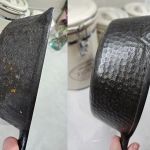 Simple At-Home Techniques for Cast Iron Restoration | Restore Your Cookware
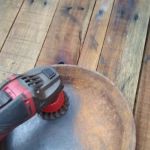 How to Restore Cast Iron at Home | A Complete Guide for Beginners
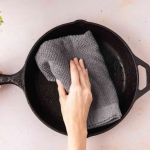 How Long Does Cast Iron Skillet Refinishing Take? Realistic Timeline for Restoration
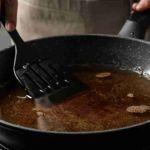 What to Avoid When Attempting Cast Iron Refinishing: Common Mistakes to Watch Out For