
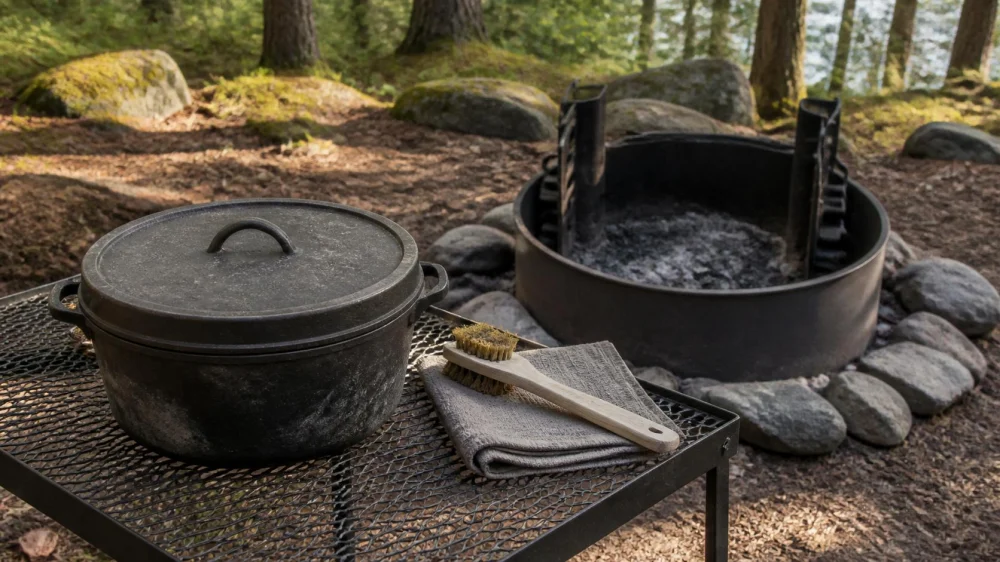
Campfire Cast Iron: Remove Soot Without Thermal Shock
On this page
- Quick answer
- Finish campfire safety first
- Cool cookware gradually
- Keep exterior soot away from food
- Wash and scrub after cooling
- Dry and renew the oil film
- Inspect after live-fire use
- Reduce soot on the next trip
- Camp cookware checklist
- Frequently asked questions
- Sources and evidence notes
- Conclusion and next steps
Quick answer
After campfire cooking, move cast iron only with secure heat-resistant tools and place it on a stable, noncombustible surface. Let it cool gradually; never pour cold water into or over very hot iron. Once it is cool enough to clean safely, scrape food, wash with hot water and mild soap, scrub soot from the exterior, rinse, dry completely, and apply a very thin oil film.
Campfire care begins with fire safety. Obey current restrictions, attend the fire continuously, and fully extinguish it before leaving. The National Park Service advises drowning the fire, stirring, adding more water, and repeating until the remains are cold.

Surface Specialists of South Central MN / surface specialists mn
MankatoBlue Earth CountyMinnesota
436 Lyd Blvd, Mankato, MN 56001, USA
Finish campfire safety first
Use fires only where and when permitted. Keep water and a shovel available, maintain clearance from branches and dry vegetation, and keep the fire small. Never leave it unattended while cookware is heating or cooling nearby.
Cookware is not a fire extinguisher. Remove it from the heat only when you can do so without burns, spills, or destabilizing the fire ring. When cooking is finished, extinguish coals according to site rules. Do not bury hot coals; they can continue to smolder.

Carefree Koatings / miracle method louisville ky
8919 Renetta Ct, Cincinnati, OH 45251, USA
Cool cookware gradually
Cast iron retains heat and may look cool before it is safe to touch. Use dry, heat-rated gloves or lifting tools designed for the pot. Keep handles out of walking paths and prevent children or pets from approaching.
Lodge warns that very hot cast iron placed in cold water can experience thermal shock, which may warp or crack it. Do not use a stream, lake, snow, or a bucket of cold water to speed cooling. Avoid setting hot cookware on wet rock, damp soil, plastic tables, or combustible surfaces.
Keep exterior soot away from food
Before opening a Dutch oven or stacking cookware, wipe loose ash and soot from the lid and exterior so it does not fall into food. Use separate cloths for the cooking surface and the sooty bottom. Pack finished food in clean containers rather than using a soot-covered lid as a serving surface.
Burn only permitted, appropriate fuel. Painted, treated, glued, or manufactured scrap wood can produce residues that should not contact cookware or food. If unknown material burned in the fire, or plastic melted nearby, stop using the cookware until contamination is evaluated.
Wash and scrub after cooling
Once the pan is cool enough for safe washing, scrape off food and rinse with hot water. A small amount of mild dish soap is acceptable under current Lodge care instructions. Scrub the food-contact surface, rim, handles, feet, lid edge, and exterior with suitable non-shedding tools.
Lodge’s live-fire advice recommends scrubbing soot after the cookware cools, then wiping until a clean paper towel shows no soot. Thick exterior buildup can transfer to storage bags, hands, counters, and food, so do not stop when only the interior looks clean.
Avoid long soaking, dishwasher cycles, harsh oven cleaner, and rapid temperature changes unless the manufacturer specifically directs them for that item.
Dry and renew the oil film
Towel-dry immediately, then warm the cookware gently to drive off moisture. Rub a very light layer of neutral cooking oil over the clean, dry surfaces and wipe away the excess. The iron should not look wet or tacky.
Open flame can shorten the life of the exterior seasoning, according to Lodge. Touch up exposed areas rather than applying a thick coat over remaining soot. Let the pan cool before packing it in a breathable, dry arrangement.
Inspect after live-fire use
Look for a new crack, severe warp, loose bail handle, damaged lid loop, sharp edge, heavy scaling, or missing leg. Set cooled cookware on a flat surface and check stability. Do not hammer, bend, or grind a damaged pot at camp.
For enameled cast iron, follow the enamel manufacturer’s heat and live-fire limitations. A chip, blister, or craze on a food-contact surface needs manufacturer evaluation and is not repaired by seasoning.
Reduce soot on the next trip
Use dry, seasoned wood where permitted, allow the fire to establish appropriate coals, and avoid placing cookware in smoky, incomplete combustion. Keep flames controlled and match the pot support to the cookware. Some campers apply an external barrier product, but use only one expressly approved by the cookware maker and keep it off food-contact surfaces.
Pack a lid lifter, heat-rated gloves, scraper, brush, mild soap, clean towels, oil, water for fire control, and separate bags for clean and sooty gear. Check site restrictions again on the day of use.
Camp cookware checklist
- Follow current fire restrictions and use designated areas.
- Attend the fire and keep water nearby.
- Move hot iron with secure heat-rated tools.
- Cool gradually on a stable noncombustible surface.
- Never put very hot iron into cold water.
- Keep exterior soot away from food.
- Wash, rinse, and wipe until no soot transfers.
- Dry promptly and apply a thin oil film.
- Inspect cracks, warping, handles, and enamel.
- Extinguish the fire until cold before leaving.
Frequently asked questions
Can cast iron go directly in a campfire?
Many bare cast-iron products are made for live-fire use, but follow the product instructions and avoid uncontrolled temperature changes.
Can I wash a hot Dutch oven in a creek?
No. It risks thermal shock, burns, contamination, and environmental harm.
Is dish soap safe for seasoned cast iron?
Lodge’s current care guidance allows a small amount of mild detergent, followed by thorough drying and oiling.
Must every black mark come off?
Stable black seasoning differs from loose soot. Continue cleaning until a clean towel no longer picks up soot.
Can I cook over painted scrap lumber?
No. Use only permitted appropriate fuel; treated, painted, or glued wood can produce unwanted residues.
What if the pan cracked?
Stop using it. Cracked cast iron can fail without warning and is not a routine campsite repair.
Sources and evidence notes
The National Park Service’s campfire safety guidance covers fire placement, supervision, and the drown-stir-repeat extinguishing method. Lodge’s live-fire cast-iron guidance explains that flame can shorten seasoning life and recommends scrubbing cooled soot until it no longer transfers.
Lodge’s care guide warns against putting very hot cast iron in cold water. Current site rules and the cookware instructions take priority.
Conclusion and next steps
Control and extinguish the campfire first, let cookware cool gradually, then clean both the food surface and the sooty exterior. Dry and oil the iron promptly, inspect it for heat damage, and pack it only when cool and dry. A clean towel that shows no soot is a practical final check before storage.



 DC Refinishing5.0 (1 reviews)
 Mila's Restoration & Remodeling5.0 (82 reviews)
 Reign Renovations5.0 (5 reviews)
 Chicago Cabinet Co0.0 (0 reviews)
 Specialized Refinishing Co.4.0 (16 reviews)
 Nicholas Tile & Bath3.0 (12 reviews)
 How to Refurbish a Cast Iron Skillet at Home: A Complete Guide
 Best Products for Cast Iron Restoration Service: Top Tools and Products
 Simple At-Home Techniques for Cast Iron Restoration | Restore Your Cookware
 How to Restore Cast Iron at Home | A Complete Guide for Beginners
 How Long Does Cast Iron Skillet Refinishing Take? Realistic Timeline for Restoration
 What to Avoid When Attempting Cast Iron Refinishing: Common Mistakes to Watch Out For