
Black Residue on Cast Iron: What to Check Before Cooking
On this page
Quick answer
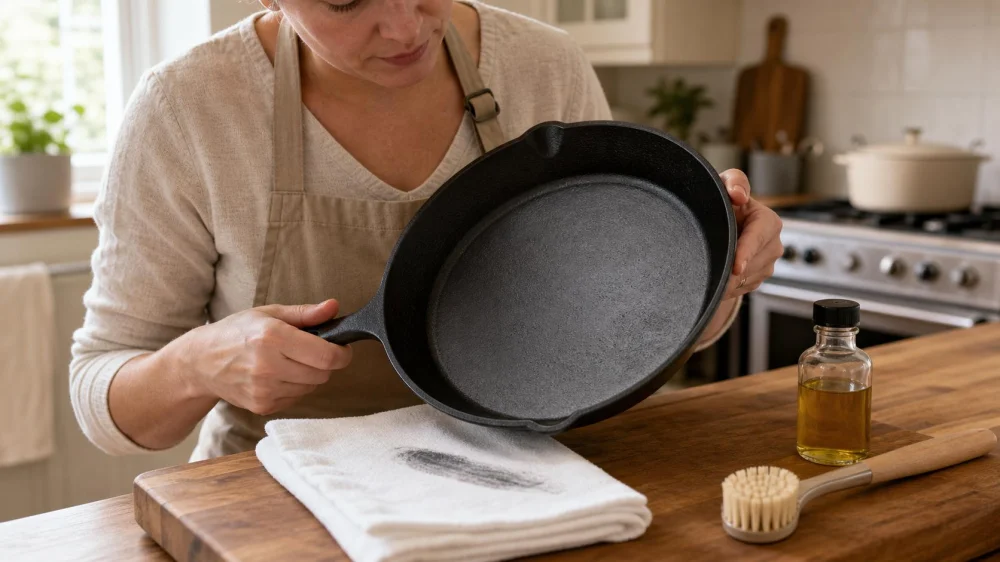
A faint grey-black mark on a drying towel can be a small amount of cast iron seasoning and may settle with normal cleaning and cooking. Thick smears, sticky residue, loose flakes, a burnt-food smell, rust, or an unknown coating need a closer look. Wash the pan, remove loose buildup, dry it fully, and apply only a very thin oil film before deciding whether to cook or reseason.
This guide is for familiar, uncoated cast iron cookware in the United States. It does not apply to enameled cast iron, decorative pieces, unknown industrial castings, or vintage cookware with a coating or history that has not been identified.

Miracle Method Surface Refinishing / miracle tub refinishing
Santa RosaSonoma CountyCalifornia
3200 Dutton Ave Suite #325, Santa Rosa, CA 95407, USA
What black residue may be
Seasoning is a thin, bonded layer formed when cooking oil is heated on cast iron. It protects the metal and supports an easier-release cooking surface. A tiny amount can transfer during drying, especially on new cookware or after acidic food or high heat has affected the surface.
Not every dark mark is the same. Compare its texture, amount, smell, and behaviour:
- Light dry grey or black transfer: may be a small amount of seasoning or iron-related residue after washing.
- Greasy black smear: can indicate excess oil, incompletely hardened seasoning, or food grease left on the surface.
- Raised crust: is more consistent with baked-on food or carbon buildup than a smooth seasoning layer.
- Loose black flakes: may be poorly bonded seasoning or accumulated residue lifting from the surface.
- Orange-brown powder or spots: point toward rust rather than normal black seasoning.
The diagnosis should be conservative. If the pan's past use is unknown or the surface appears painted, coated, repaired, contaminated, or chemically stripped, do not prepare food in it until a knowledgeable professional identifies the material and condition.

Fort Worth Refinishing / fort worth bathtub refinishing
2627 S Cooper St Suite E12, Arlington, TX 76015, USA
Inspect the pan
- Let it cool. Do not inspect or wash a dangerously hot pan, and avoid a sudden temperature change that could stress the iron.
- Use bright light. Look across the cooking surface, sidewalls, rim, handle, underside, and any lid.
- Check texture. Stable seasoning can vary in colour but should not have soft sticky pools or large loose scales.
- Smell the dry pan. A persistent rancid or burnt-food odour suggests oil or food residue needs more cleaning.
- Look for damage. Stop using cookware with a crack, sharp loose fragment, severe warping, unknown repair, or unstable handle.
- Confirm the finish. Enameled cast iron has a glass-like coating and follows different care instructions. Do not scrub it as though it were bare seasoned iron.
A dark pan is not automatically dirty, and a shiny black surface is not automatically well seasoned. Focus on whether the surface is clean, dry, bonded, and free of damage or unknown material.
Clean and dry step by step
- Wash the cooled pan by hand with warm water and a small amount of ordinary dish soap.
- Use a pan scraper, nylon brush, or non-scratch pad to lift food and loose residue. Work until the surface feels clean rather than oily or crusted.
- For stubborn stuck food, simmer a little water briefly, let the pan cool to a safe handling temperature, then scrape and wash again.
- Rinse away loosened material and soap.
- Dry immediately and thoroughly with a lint-free cloth or paper towel. Gentle stovetop heat can remove remaining moisture, but do not leave the pan unattended.
- When the pan is dry and only warm, apply a very thin film of suitable cooking oil. Wipe again as though trying to remove the visible oil; the surface should not drip or feel tacky.
Repeat ordinary cleaning once if a heavy greasy smear remains. More oil is not a shortcut to better seasoning. A thick layer can stay sticky, cure unevenly, and contribute to future buildup.
Decide whether to cook or reseason
Continue normal cooking when the pan is known food cookware, structurally sound, clean, fully dry, not sticky, free of loose flakes, and shows only a faint towel mark. Use moderate heat and enough cooking fat for the food.
Reseason when the surface is dull or patchy, food sticks after proper preheating and oil use, or cleaning removes loose seasoning and exposes grey iron. Follow the cookware manufacturer's instructions. A typical oven-seasoning process uses a washed, completely dry pan and an extremely thin oil layer, with safe ventilation and heat-resistant handling.
Restore more fully when rust or persistent flaking covers a meaningful area. Remove unstable material using a method appropriate for bare cast iron, wash and dry completely, then rebuild seasoning. Professional restoration can be a better choice for valuable vintage cookware, heavy corrosion, an uncertain surface, or a piece whose structure needs assessment.
Do not cook yet when the pan has an unknown coating, chemical smell, residue that returns heavily after proper cleaning, physical damage, or an uncertain previous use.
Prevent heavy buildup
- Clean the pan after use rather than baking new oil over stuck food.
- Dry promptly and completely to reduce rust risk.
- Use a thin maintenance coat of oil, then wipe away the excess.
- Preheat gradually; high heat is rarely necessary for routine cooking.
- Match food and cook time to the maturity of the seasoning, especially with acidic recipes.
- Store the pan dry with airflow rather than sealed while damp.
- Check the underside and handle too; residue and rust are not limited to the cooking surface.
Seasoning changes with use. Colour variation, a matte patch, or a less-than-glossy finish can be normal. Aim for a clean and functional surface rather than a perfect cosmetic appearance.
Important limits and stop signs
Do not use oven cleaner, lye, electrolysis, power tools, fire, or a self-cleaning oven merely because a towel shows a faint mark. Aggressive stripping adds chemical, heat, electrical, dust, and surface-damage risks and may erase a stable seasoning layer. If a full restoration is actually needed, choose a documented method and the right protective setup.
Never mix cleaning chemicals. Provide ventilation when heating oil, keep smoke alarms active, keep children and pets away, and stop if oil smokes heavily. Hot cast iron retains heat longer than its appearance suggests.
For vintage pieces, maker marks and cookware history can be useful, but age alone does not prove food safety. Avoid cookware previously used for melting metal, holding chemicals, decoration, or another non-food purpose. When in doubt, consult an experienced cast iron restoration professional.
Frequently asked questions
Is a little black residue on a paper towel normal?
It can be normal seasoning transfer, particularly on new cookware or after acidic food or high heat. The pan should still be washed, dry, non-sticky, and free of loose buildup. Heavy recurring residue deserves further cleaning and inspection.
Can I use dish soap on seasoned cast iron?
A small amount of ordinary modern dish soap is commonly included in manufacturer care instructions. Wash by hand, avoid prolonged soaking, rinse, and dry promptly. Follow the directions for the specific cookware.
Are black flakes dangerous?
Do not guess at the material. Loose flakes can indicate poorly bonded seasoning or food buildup, but an unknown coating requires a different response. Remove loose residue, inspect the pan, and do not cook until the surface and product type are understood.
Why does my pan feel sticky after oiling?
Too much oil is a common cause. Wash or wipe away the excess, dry the pan, and use only an extremely thin film. If reseasoning, follow the manufacturer's time, temperature, and ventilation guidance.
Should I strip the whole pan?
Not for a faint towel mark. Consider full restoration only for persistent widespread flaking, corrosion, heavy unknown buildup, or another condition that ordinary cleaning and reseasoning cannot address.
Sources and evidence notes
This guide distinguishes slight seasoning transfer from sticky oil, carbon buildup, rust, and an unknown coating. Lodge Cast Iron's seasoning and care guidance says a little dark towel residue can be normal, recommends removing loose flakes with appropriate scrubbing, and emphasizes a very thin oil layer. That manufacturer guidance is useful for seasoned bare cast iron but does not identify every vintage pan or replace the instructions for another brand or finish.
Next steps
Cool, wash, inspect, and completely dry the pan. If it is a known bare cast iron piece with a stable, clean surface and only a faint towel mark, maintain it with a very thin oil film and resume normal cooking. If residue remains heavy, flaky, sticky, rusty, damaged, or unknown, pause use and choose reseasoning, restoration, or expert identification.




 Tri Town Cabinets5.0 (2 reviews)
 ALC Maintenance LLC5.0 (1 reviews)
 John's Custom Countertops4.0 (8 reviews)
 CPOS Refacing4.0 (112 reviews)
 All American Kitchens and Baths4.0 (6 reviews)
 Historic Renovation & Terracotta5.0 (14 reviews)
 How to Refurbish a Cast Iron Skillet at Home: A Complete Guide
 Best Products for Cast Iron Restoration Service: Top Tools and Products
 Simple At-Home Techniques for Cast Iron Restoration | Restore Your Cookware
 How to Restore Cast Iron at Home | A Complete Guide for Beginners
 How Long Does Cast Iron Skillet Refinishing Take? Realistic Timeline for Restoration
 What to Avoid When Attempting Cast Iron Refinishing: Common Mistakes to Watch Out For